
Height is a fundamental physical attribute that is nearly impossible to alter significantly after one has grown.
Previously, we’ve discussed how many men resort to desperate measures like “breakage and growth” surgeries to increase their stature.

This procedure is incredibly complex and invasive.
In essence, it involves deliberately fracturing bones, then attaching an external traction device. This device slowly pulls the bone fragments apart in opposite directions, stimulating new bone growth to lengthen the limb. This is also known as limb lengthening surgery.

Bone lengthening surgery: the process of bone extension.
Patients typically spend thousands of dollars and endure months to a year of recovery and rehabilitation to achieve their desired height.
While there are success stories online, this surgery carries numerous side effects and extremely high risks. In many countries, including China, this procedure is not permitted for healthy individuals.
However, driven by aesthetic ideals, a growing number of women are doing the opposite, seeking an extreme surgery called leg shortening. They often feel their height is excessive and desire a more petite appearance.

Equipment used in bone lengthening procedures.
Leg Shortening Surgery: A Cut to Become 5 cm Shorter
Leg shortening surgery, pioneered by clinics in Istanbul, Turkey, is a burgeoning cosmetic service primarily for individuals who perceive their height as excessive. Women are the primary demographic, believing that being too tall hinders romantic prospects. Men also opt for this procedure.
The only way to decrease height through surgery is by altering the bones.
Those who choose leg shortening surgery typically opt to remove a section of the femur, commonly known as the thigh bone.
After resecting a portion of the femur, metal implants are used to reconnect and stabilize the two bone segments. Once the cut bone heals, the implants are removed. No external fixation devices are required.

Clinics claim that this procedure can reduce height by over 5 centimeters. In addition to the femur, the tibia can also be shortened; the thigh bone can be reduced by up to 5.5 cm, and the lower leg by up to 3 cm.
If the desired height reduction is not achieved, the surgery can be repeated, with at least a six-month interval between procedures to allow for bone healing.
The marketing for this procedure often portrays it as a “hassle-free” experience.
Many clinics bundle leg shortening surgery into travel packages that include city tours, dining experiences, and boat trips, with the surgery being the final component.
They also assert that the surgery leaves no visible scars.

Post-surgery, patients are typically discharged within 3-5 days. During the first month, a wheelchair or walker is required. After six weeks, most patients can walk independently with crutches. Full bone union usually occurs within three to four months.
With the assistance of physical therapy, patients can regain normal mobility within a few months.
So, what is the reality of this procedure?
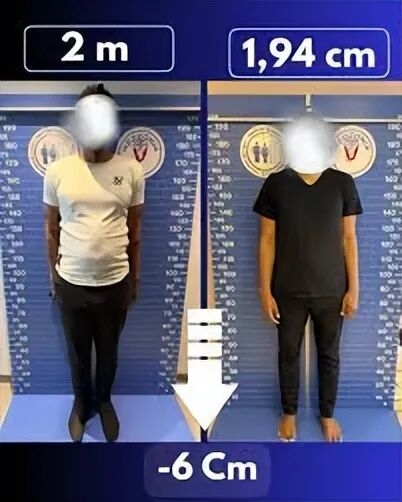
Clinics have shared some case studies. One patient, who traveled from the United States to Turkey for the surgery, saw her height decrease from 173 cm to 168.1 cm, a reduction of 4.9 cm.
Photographs taken with the same partner before and after the surgery show the woman appearing noticeably more petite post-operation.

Extremely High Risks
As is universally known, all surgeries carry risks. Clearly, procedures like height extension and reduction, which involve bone reconstruction, are inherently dangerous, regardless of the direction of alteration.
Historically, such high-risk procedures were reserved for individuals with severe leg conditions (like deformities or unequal leg length) that impacted their daily lives. However, it has now become a means for cosmetic alteration.
Medically, leg shortening is referred to as “femoral shortening osteotomy.” Similar to height extension, in many countries, this procedure is strictly for pathological correction. Yet, in Istanbul, Turkey, it’s available to anyone willing to undergo it. One clinic reportedly performed 10 such surgeries in less than two years.

An example of leg deformity correction surgery.
Clinics themselves are aware of the substantial risks involved. Before surgery, they conduct psychological assessments and inform patients about potential side effects. These can include nerve damage, bone infections, muscle weakness, delayed or non-union of the bone, leading to permanent immobility or chronic pain.
If patients accept these potential consequences and are still determined to proceed, those with higher body weight are advised to lose weight. This is because the internal implants have weight-bearing limits, and patients typically cannot exceed 75 kilograms.

Final Thoughts
Honestly, it is difficult to comprehend the appeal of such procedures (the idea of someone being unhappy with being too tall is quite baffling).
Gaining a more positive quality of life through surgery to correct a personal deficiency is understandable; it’s often a necessary step.
However, for many healthy women to undergo such a high-risk procedure simply to conform to societal beauty standards and “become shorter” seems like a trade-off where the risks far outweigh the perceived benefits.
Attractiveness is multifaceted; height is only one component.
