
Last year, when Tony discussed the Xiaomi Pad 7 (priced at 1999 yuan) with everyone, he noticed quite a few people were startled by its accessory – the “floating keyboard,” priced at 999 yuan, nearly half the cost of the tablet itself.

At the time, we pointed out that Xiaomi’s keyboard, on one hand, utilizes two pairs of hinges with near-identical opening and closing resistance, inevitably leading to higher costs. On the other hand, when compared to the “floating keyboards” from Apple or Lenovo’s Legion series, Xiaomi’s offering was actually considerably cheaper. When bundled with the tablet, the overall price could even be more affordable.

Consequently, the colleague who reviewed the Xiaomi Pad 7 genuinely appreciated its cost-effectiveness and purchased the floating keyboard set, using it consistently until now. The occasional complaint might be that its third-generation Snapdragon 7+ processor is starting to fall short in performance.
Unexpectedly, nearly a year has passed, and Xiaomi remains the sole manufacturer committed to the “floating keyboard” solution. This time, the Xiaomi Pad 8 features the fourth-generation Snapdragon 8s in its standard edition, effectively addressing the performance bottleneck.
To put it simply, the configuration of the base model of the Xiaomi Pad 8 can now “outperform” the previous generation’s Pro model (which featured the third-generation Snapdragon 8s processor). Apart from the processor, fingerprint recognition, and camera systems, the Xiaomi Pad 8 shares almost identical configurations with the Pro model, aside from these key areas.

Therefore, Tony believes it’s necessary to revisit the Xiaomi Pad 8 with its “floating keyboard” for everyone.
As usual, let’s start with the exterior. The Xiaomi Pad 8 shows virtually no significant changes compared to its predecessor. It retains the convenient 11.2-inch size, and even the Type-C charging port’s off-center placement, almost bordering the edge, remains unchanged.


Left: Xiaomi Pad 7, Right: Xiaomi Pad 8
Fortunately, while the overall weight has been slightly reduced, the battery capacity has been upgraded from the Xiaomi Pad 7’s 8850mAh to 9200mAh, which is a minor but welcome improvement.

Furthermore, the accompanying stylus for the Xiaomi Pad 8 has ditched the physical buttons of the previous generation, upgrading to the pressure-sensitive Stylus Pro.
To be frank, last year’s Xiaomi stylus already offered a user experience remarkably close to Apple Pencil in terms of writing and latency. This upgrade to the Stylus Pro’s exterior design can truly be considered an epic comparison.
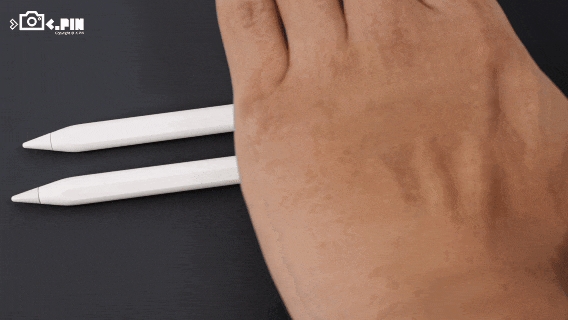
However, jokes aside, Xiaomi’s stylus Pro clearly brings tangible benefits. A gentle squeeze of the stylus body allows for quick access to handwriting shortcuts on any interface. This includes activating Xiao Ai, entering Xiaomi’s drawing app, or performing functions like taking screenshots.
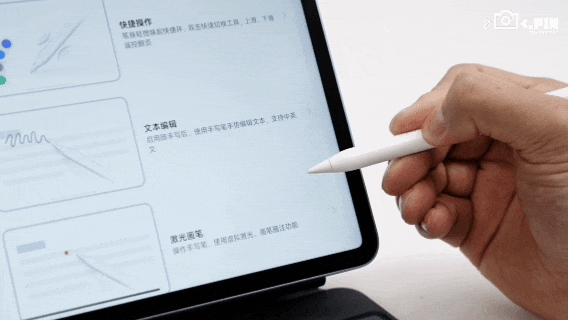
You can also directly input content using the stylus in system settings, WeChat, and even search bars within web pages and applications.
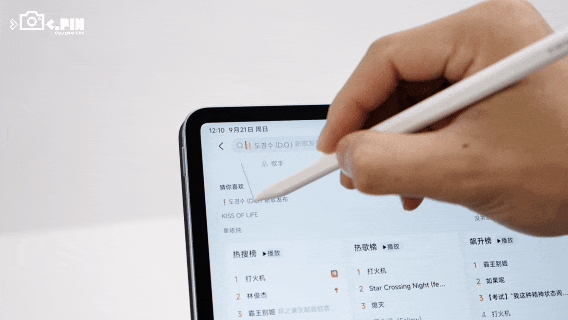
Having tested it with both generations of tablet, keyboard, and stylus sets, I found that they are all mutually compatible. This means that users who previously purchased the Xiaomi Pad 7 family can simply upgrade to the Xiaomi Pad 8 if they wish to enhance performance, while still being able to use their existing stylus and keyboard.
Moreover, and this is something many might overlook, Xiaomi has equipped its previously released tablets (Xiaomi Pad 7 Pro, Xiaomi Pad 7S Pro, Xiaomi Pad 7 Ultra) with floating keyboards.
The reason behind Xiaomi’s persistence with the floating keyboard design is likely to emulate Apple (just kidding!).

Naturally, it’s to allow the tablet to “float” at multiple angles during use. More importantly, the keyboard and protective case function as a unified unit, securely attaching to the tablet.
In contrast, many current detachable keyboard designs separate the keyboard and protective case, both requiring individual magnetic attachment to the tablet, with often subpar positioning. This can lead to the protective case loosening when adjusting the keyboard angle.

Regarding the decision to include a touchscreen keyboard and stylus with the tablet, the natural purpose is to enhance the tablet’s productivity. Let’s delve into the productivity aspects.
Compared to the Xiaomi Pad 7, the Xiaomi Pad 8 shows improvements in interaction efficiency and logic.
The reason for this might surprise you: the Xiaomi Pad 8 comes pre-loaded with HyperOS 3.0! This update is a significant step forward for the user experience.
First, the Xiaomi Pad 8 offers more split-screen ratio options. In landscape mode, the previous Xiaomi Pad 7 only supported two split-screen ratios, whereas the Xiaomi Pad 8 now supports three and allows for quick switching between them.
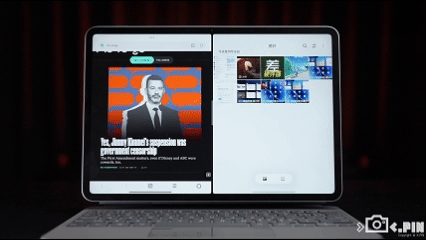
While this functionality might feel familiar, as Huawei and OPPO have implemented similar features, Xiaomi’s arrival now is certainly timely.
An additional point worth mentioning is that the Xiaomi Pad 8 rectifies the widely criticized issue of its predecessor’s inability to perform vertical split-screen. Previously, even when used in portrait mode, the splitting logic on the Xiaomi Pad 7 divided the screen into left and right halves, resulting in a narrow aspect ratio that reduced text and image readability. The Xiaomi Pad 8 now implements a top and bottom split in portrait mode, which is a much more intuitive user experience.
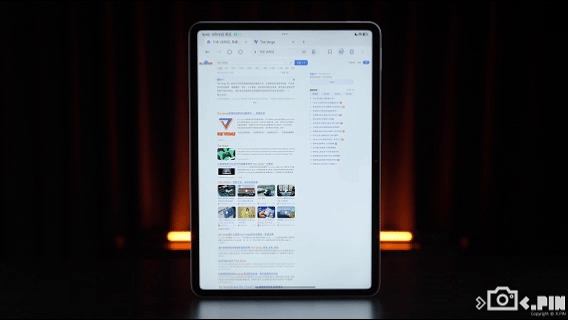
Beyond improved split-screen functionality, another enhancement to user efficiency is the ability to experience desktop-like web layouts and interactions within the Xiaomi Browser.
Essentially, web pages opened in the Xiaomi Browser are now miniature versions of their PC counterparts, maintaining the same overall page proportions and layout.
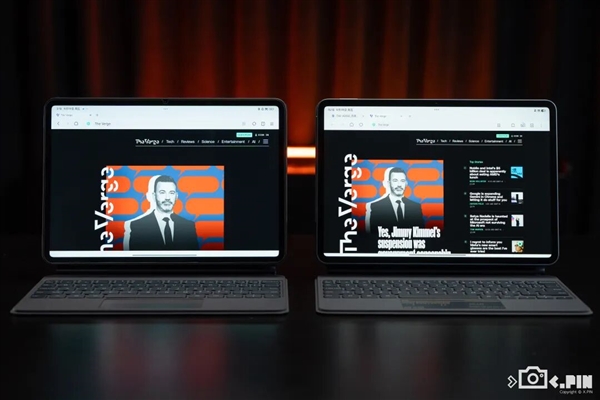
Left: Xiaomi Pad 7, Right: Xiaomi Pad 8
At first glance, one might not fully grasp the significance of Xiaomi’s browser adaptation. Indeed, I initially felt that this desktop-like browser made key information less prominent. However, for users like university students who frequently access school websites or portal sites, this display on the Xiaomi Pad 8 aligns more closely with their viewing habits.
Furthermore, hovering the cursor over a tab provides a preview of its content, and hovering over toolbar icons displays their respective function descriptions. Crucially, the Xiaomi Browser supports PC keyboard shortcuts for actions like closing or switching tabs, eliminating the need for finger or stylus taps.

Additionally, the stability of PC-grade office applications on the Xiaomi Pad 8 has seen some improvement. For instance, applications like WPS, CAJViewer, and Zhongwang CAD, which previously exhibited occasional bugs like crashes when opening multiple documents on the Xiaomi Pad 7, are now largely free of such issues on the Xiaomi Pad 8.
as mentioned earlier, the processor upgrade in the Xiaomi Pad 8 allows it to handle some demanding games. We conducted a brief test of Genshin Impact’s Sumeru City traversal.

According to PerfDog data, at a resolution of 1281P, the Xiaomi Pad 8 achieved an average game frame rate of 59.5 FPS, with frame rates remaining consistently stable throughout.

Furthermore, the measured temperatures on both the front and back of the tablet after the traversal indicate that the Xiaomi Pad 8 can competently handle playing demanding games. While the previous Xiaomi Pad 7 was not suitable for gaming, the Xiaomi Pad 8 now provides Xiaomi fans with an additional option for their daily entertainment.

After all, some performance-oriented smartphones this year, such as the iQOO Z10 Turbo Pro and Redmi Turbo 4 Pro, and even the long-awaited Meizu 22, are also equipped with this processor (a bit of a joke).
Returning to the topic of productivity, I was quite curious to see how the processor upgrade would impact productivity. We tested both the Xiaomi Pad 7 and Xiaomi Pad 8 by exporting the same 4K 60fps video in CapCut. The Xiaomi Pad 8 managed to reduce the export time by nearly a minute.

02: Xiaomi Pad 7, 01: Xiaomi Pad 8
This clearly demonstrates that to credibly discuss “productivity” on tablets, adequate performance is paramount. As you can see, many tablets this year have started adopting flagship-level processors, and even the base model of the Xiaomi Pad 8 features the fourth-generation Snapdragon 8s.
Having discussed these points, the Xiaomi Pad 8, as a standard iterative product, has been covered sufficiently.
However, observant readers might notice that the Xiaomi Pad 8 I have here has a slightly different screen – it’s a matte display.
I won’t go into the intricate details of the technology, but in simple terms, it utilizes nano-etching to create fine textures on the screen surface, achieving a matte-like effect. Combined with an anti-reflective coating, this reduces glare and screen reflections, resulting in a more comfortable viewing experience.
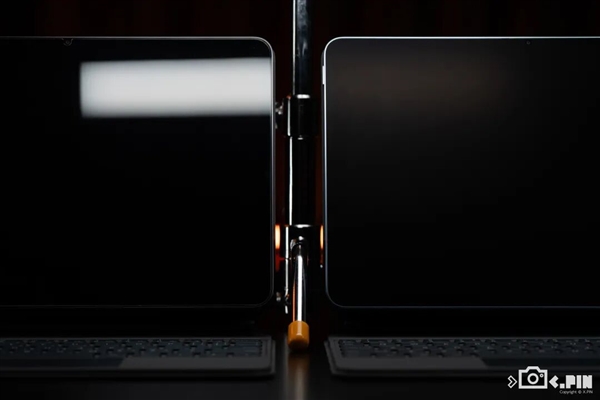
Left: Xiaomi Pad 7, Right: Xiaomi Pad 8
This technology, at first hearing, not only reduces screen reflections and improves visibility in bright light but also allows for a more natural writing feel due to the subtle textures on the glass surface. However, there’s a consideration.
For individuals sensitive to clarity, the graininess caused by the glass etching can reduce display sharpness and, conversely, may lead to visual fatigue.
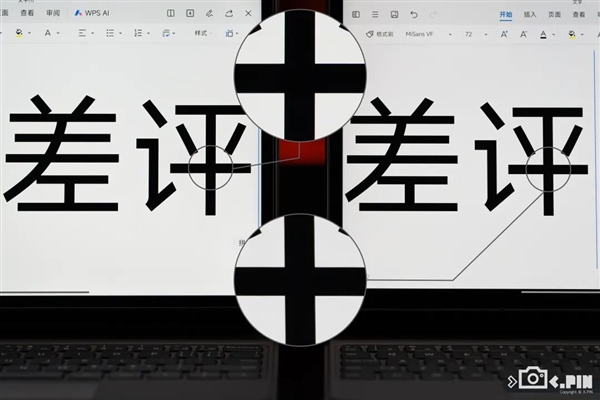
Left: Xiaomi Pad 7, Right: Xiaomi Pad 8
Therefore, I must advise that before purchasing the matte version, it’s best to experience it firsthand at an offline store to determine whether this matte technology is beneficial or detrimental for your personal use.
Finally, here’s a summary for everyone.

If you prioritize the integrated experience of the magnetically attached touchscreen keyboard, or if you have had concerns about the performance of the Xiaomi Pad 7, then this Xiaomi Pad 8 might be a product that offers a comprehensive upgrade. However, for other users, I am genuinely curious: would the integrated floating keyboard become a deciding factor for you when considering a Xiaomi tablet?
