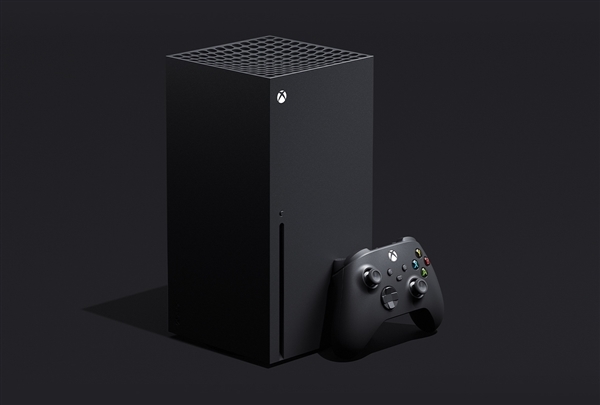
The PlayStation 5 (PS5) and Xbox Series X/S (XSX) have been on the market for several years, and their performance is starting to lag behind current technological advancements. It’s high time for an upgrade. Both Sony and Microsoft are expected to collaborate with AMD to develop new processors for their next-generation consoles. Recent leaks have already provided some insights into the upcoming PlayStation 6 (PS6).
Microsoft has not been idle either. Given that the current XSX’s performance has been somewhat outpaced by the PS5, Microsoft has likely incurred some disadvantages in recent years. Therefore, expectations for the next-generation Xbox are incredibly high. The latest claims from well-known leaker MLID have been particularly eye-opening.
Previously, MLID had revealed that the codename for the next-generation Xbox processor is “Magnus.” This processor is rumored to feature 11 Zen 6 architecture CPU cores and an upgrade to the RDNA 5 GPU architecture, manufactured on a 3nm process. It’s expected to have up to 70 Compute Units (CUs), with a likely implementation of 68 CUs.

However, the latest information regarding memory specifications is even more astonishing. While previous rumors suggested 18GB of VRAM, the most recent reports point to a massive 48GB of GDDR7 memory, with the memory bus width remaining at 192-bit.
A substantial 48GB of VRAM would be a game-changer for demanding graphical features like path tracing and AI-accelerated effects. It could even open up possibilities for running large language models (LLMs) directly on the console, paving the way for entirely new gameplay experiences.
However, such a specification also presents significant challenges. The next-generation Xbox is anticipated to launch around 2027. The current market is experiencing a memory price hike, and the cost of 48GB of high-speed VRAM alone would be substantial. This has led to speculation that the new Xbox could retail for as much as $1000 USD, a price point that seems highly improbable for a console.
Considering these factors, even if a 48GB VRAM Xbox console is under development, it’s more likely to be a testing phase for engineering prototypes. The actual implementation in a retail product is exceedingly difficult. While Microsoft might be looking to reclaim market dominance over the PS6, such a financially risky venture seems unlikely.
Nevertheless, alongside enhanced ray tracing, AI capabilities are clearly set to be a major focus for the next generation of consoles. A chip like “Magnus” could achieve impressive AI performance, with up to 110 TOPS at 6W of power consumption, and 46 TOPS at 1.2W. This aligns with Microsoft’s broader AI PC initiatives, and it’s hoped that this will lead to the development of more innovative and useful features.