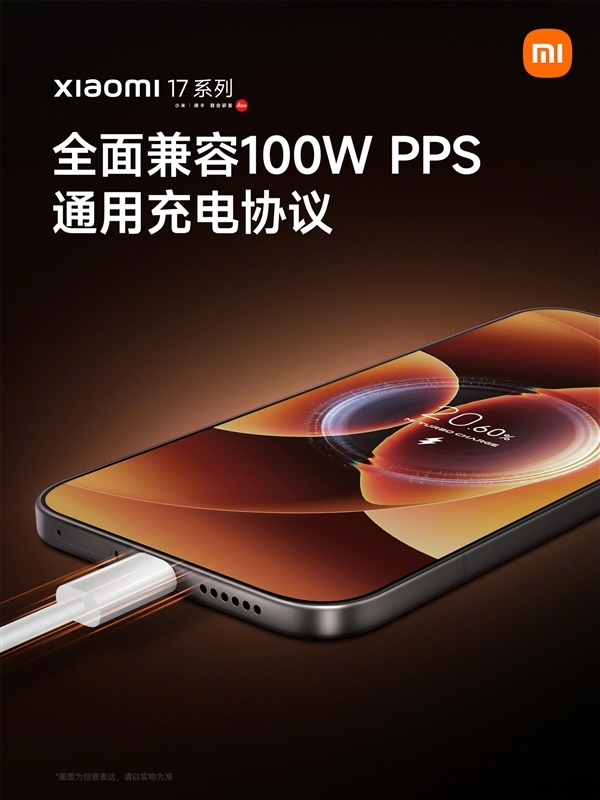
Xiaomi’s latest Xiaomi 17 series of smartphones now fully supports the 100W PPS universal charging protocol. This is a significant development, as it means users are no longer limited to proprietary chargers from Xiaomi or Coolikexing to achieve full-speed fast charging. This new compatibility removes a potential barrier for users who may have previously invested in third-party chargers or simply want more flexibility in their charging options.
Initially, this might have seemed like a setback for users of older Xiaomi flagship models, as the new protocol wouldn’t have been available to them. However, a clever workaround has since emerged, offering a glimmer of hope.
Tech enthusiasts have hypothesized that since Xiaomi’s private MiPPS protocol is a modified version of the public PPS standard, it should theoretically be possible to revert the modified protocol back to the public PPS by tweaking system configurations. This would allow older Xiaomi devices to also benefit from 100W PPS universal fast charging.
Indeed, a user on the Kuan community forum, @低线阻狂魔, has delved deep into the matter and confirmed that this is achievable. For older Xiaomi models equipped with the Surge P1 or P2 power management chip, unlocking 100W PPS fast charging is possible by rooting the device and modifying its configuration files.
Below are the specific commands that can be utilized:
For Xiaomi models with Snapdragon chips (after rooting):
echo 1 > /sys/class/qcom-battery/pd_verifed
For Xiaomi models with MediaTek chips (after rooting):
echo 1 > /sys/class/Charging_Adapter/pd_adapter/usbpd_verifed
For Xiaomi models with Surge X1 O1 chip (after rooting):
echo 1 > /sys/class/subpmic-battery/pd_verifed

Reports have surfaced of users successfully enabling 100W PPS fast charging on devices like the REDMI K60 Extreme Edition. Furthermore, for older models that do not feature the P1/P2 chip, users have also reported that executing the code on the MIX 4 resulted in a significant jump in PPS power from 27W to 50W. These findings strongly suggest that many older Xiaomi devices inherently possess the capability for public PPS fast charging, with this functionality simply being disabled by default.
The underlying mechanism of these commands is straightforward: they essentially change a value in the configuration file from 0 to 1, unlocking a feature that was already present in the hardware. This reflects a common strategy in the industry where certain functionalities are software-locked, allowing for tiered product offerings or later enablement through updates or user intervention. It’s worth noting that enabling 100W PPS universal fast charging may disable original Xiaomi Surge rapid charging protocols, such as the 120W charging, on applicable devices. This trade-off highlights the importance of understanding the implications before making system modifications.
For those interested in a more user-friendly experience, some users have already developed modules and applications that streamline this process. However, a word of caution remains essential: rooting your device carries inherent risks, and proceeding with any system modifications should be done with careful consideration and an understanding of potential consequences. As always, proceed with caution when undertaking such advanced system tweaks.