
Recently, many people have likely seen a viral video:
A group of students participating in an aircraft competition repeatedly taking off, conducting simulated bombing runs, and quickly re-equipping for the next round, reminiscent of Formula 1 racing.
This purely hand-crafted aircraft, with a wingspan of 3 meters, managed to complete an astonishing 8 bombing runs in just five minutes.

Netizens were quick to remark that if these aircraft were made with 3D printing materials and equipped with real munitions, they could immediately become combat-ready bombers.
Many also commented that this might explain why China is developing sixth-generation fighters and carrier-based aircraft; it seems these students were already deeply involved in aviation design during their university years.

The video was even shared on international platforms, where some foreigners reportedly responded, “Look what Chinese university students are doing. American students have lost the race from the start.”

However, more people were asking: “What kind of competition is this so hardcore? Why haven’t we seen it before?”
Model aircraft enthusiasts likely recognized this as the China University Aviation Design Competition (CUADC). Open to university students nationwide, it features nearly all the “Seven Sons of Defense” institutions, such as Beihang University, Beijing Institute of Technology, and Northwestern Polytechnical University, participating annually.

A similar competition is the China International Airborne Vehicle Design Contest (CADC), which is an even more significant event, open to universities worldwide, including military academies.
Coincidentally, during my own university days, I was involved in similar competitions, and I’d like to share some insights into how these events unfold.
If you only watch the video, you might think it’s just students controlling large-scale remote-controlled toys.
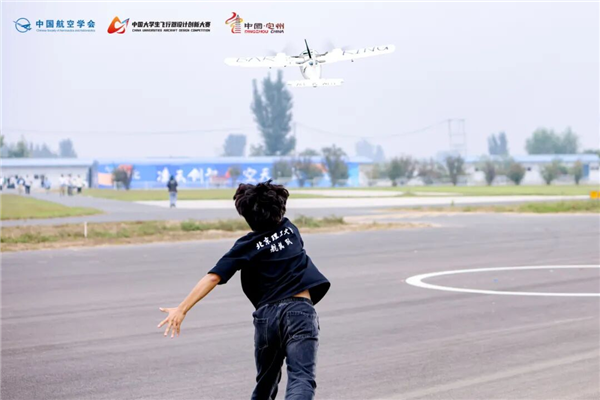

Image source: Beijing Institute of Technology
In reality, these competitions, especially CADC, are considered among the world’s top three aircraft design contests, alongside the SAE competitions in the US and ACC in Europe.
The competition categories themselves sound quite formidable. The one featured at the beginning is “Ground Reconnaissance and Strike.” Other categories include “Vertical Take-Off and Landing Transport” and “Space Rocket Launch and Recovery.” Each of these directly targets real-world military or cutting-edge technologies, so the netizens’ assumptions are indeed accurate – these skills can genuinely be applied on the battlefield.
However, participating in such competitions is not for the casual enthusiast; one must be a full-stack aerospace engineer.
Based on my own competition experience, building a competitive aircraft is very similar to the actual process of designing real aircraft. The entire workflow, from conceptualization to completion, falls upon the student teams.
This means you need expertise in aerodynamic layout, structural design, and flight control algorithms. In the mid-stage, you’ll deal with material selection, airframe construction, and circuit soldering. Finally, the process culminates in flight testing, mission planning, and on-site operation. Every single aspect must be handled by the team.
In other words, you need to understand not only aerodynamics but also material mechanics, automatic control systems, and even image recognition to successfully complete the competition tasks.

Specifically, you must first choose a design scheme. Will it be a conventional layout, or perhaps a flying wing? For the airfoils, would you use a high-lift Clark Y or a high-speed NACA profile? Every choice significantly impacts the aircraft’s final performance.
Next comes computer simulation. You’ll input your designed aircraft model into software for aerodynamic simulations to assess its efficiency, and structural mechanics simulations to identify potential weak points in the frame.
Only after passing simulations does the hands-on work begin. Don’t assume everything is 3D printed; often, it relies on manual craftsmanship. Aircraft frames are meticulously constructed by cutting and sanding carbon fiber rods and balsa wood, piece by piece, and then bonding them together.

From initial drawings to the first flight, every stage is a triple test of knowledge, skill, and patience. This isn’t just a technological competition; it’s a test of teamwork, focusing on which institution’s aerospace engineers have the greatest potential.
It is this end-to-end creation process, from concept to tangible asset, that makes the CADC and CUADC stages so imaginative.
Besides the “Seven Sons of Defense,” top universities like Tsinghua University and National University of Defense Technology also participate, alongside specialized aviation institutions such as Guilin University of Aerospace Technology, Nanchang Institute of Aeronautics Technology, and Shenyang Aerospace University. Each year, over a thousand participants bring their incredibly diverse creations to compete. I daresay it’s more captivating than an airshow.
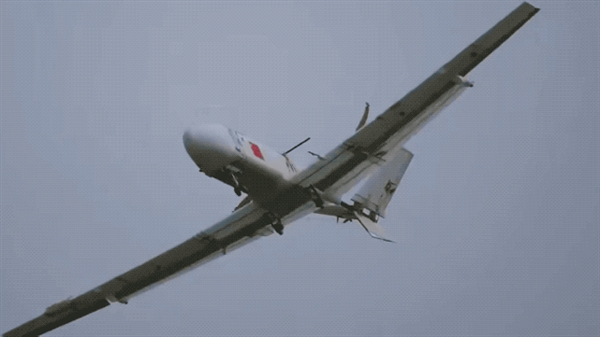
Zhejiang University’s 3D-printed blended wing body transport aircraft. Source: Aviation Model Intelligence Bureau
Alongside conventional aircraft designs, you’ll find imaginative flying wing designs. Some participants, in their pursuit of lift, have developed “monsters” with triple wing configurations. There have even been attempts to replicate Leonardo da Vinci’s ornithopter designs, taking flight with flapping wings like a bird.
The competition venue truly resembles the “hundred flowers blooming” era of aviation’s infancy over a century ago, filled with dazzling and whimsical experiments. Behind every peculiar design lies the pure passion and exploration for aviation by a group of young individuals.
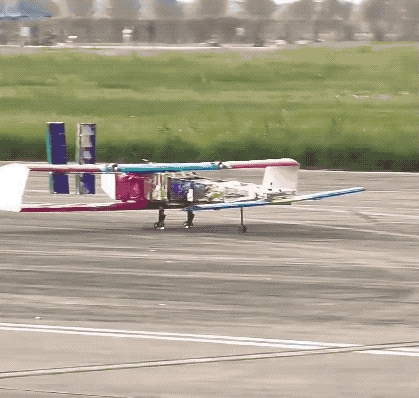
Tongji University’s biplane canard configuration transport aircraft. Source: Aviation Model Intelligence Bureau
Seeing all this, you might wonder, what’s the point for these students? Isn’t it just a competition? Can it guarantee postgraduate admission or give academic credit?
The truth is, the real value of these competitions lies far beyond the trophies.
While these competitions appear spectacular, for a long time, they were largely an “internal celebration” within the model aircraft enthusiast community. However, in recent years, with increasing public attention on China’s aviation industry, including advancements in sixth-generation fighters and carrier-based aircraft, CADC and CUADC have begun to gain wider recognition and enter the public’s view.
Unlike the “MeiJia” (Maker) robot competition, which benefits from DJI’s operational support and features concert-like venues and live broadcasts, the atmosphere at CADC and CUADC is more akin to a pure, grassroots technical exchange.
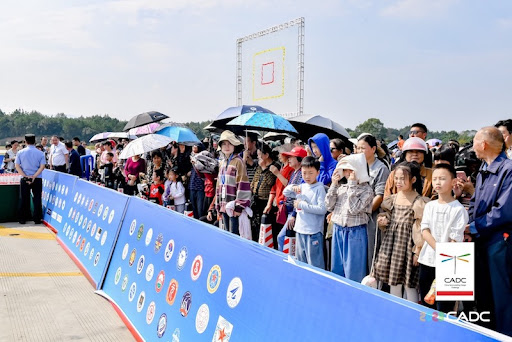
But its value precisely lies in this purity.
The pure passion of these students provides the most excellent and hardcore reserve talent for China’s aerospace industry.
As a direct example, the chief designer of China’s COMAC C919 large passenger aircraft, Li Qing, grew up playing with model aircraft. His career trajectory perfectly illustrates the seamless connection between these contests and national key model engineering projects.
Looking back at earlier generations, pioneers of China’s aviation industry, renowned experts like Gu Songfen and Zhu Baoliu, were all active members of Shanghai Jiao Tong University’s model aircraft team.
It can be said that from the very inception of China’s aviation industry, the flame of model aircraft has never been doused, continuously supplying the most brilliant minds for the nation’s skyward aspirations.

Today, these model aircraft competitions have evolved into a talent pipeline for China’s aerospace sector. Over 60% of students who intensely compete in these events secure positions in aerospace research institutes, major technology companies, and military-industrial units upon graduation.
Winning an award often provides a fast track for campus recruitment at prestigious organizations like Aviation Industry Corporation of China (AVIC) and China Aerospace Science and Technology Corporation (CASC). For instance, one student received a provincial CADC award in their sophomore year and interned at Aerospace Research Institute No. 1 during the summer.
The orbital planning for Shenzhou-8 and the rendezvous and docking algorithms for Tiangong-1… these complex operations were developed by brilliant individuals who emerged from these very competitions.
Therefore, one could argue that these students are merely playing, but it’s equally accurate to say they are engaging in real-world practice for their future. The simulated bombs dropped on the competition field today could become real missiles designed tomorrow; the flight control systems debugged through sleepless nights today could be integrated into actual drones in the future.

So, when we look back at that “bombing” video that astonished netizens, you can likely appreciate its deeper significance.
Essentially, what we are witnessing is not just students handcrafting aircraft, but the very engine behind China’s rapid advancement in aerospace. This is the key:
Behind it lie countless laboratories and competition fields, where generations of young people, through sleepless nights, burnt-out speed controllers, and shattered wings, maintain their passion and an unyielding spirit.
They are flying model airplanes, but what they carry are the aspirations of an entire nation for its future in the sky.
