
On October 31st, at 23:44 Beijing Time, China successfully launched the Shenzhou-21 manned spacecraft from the Jiuquan Satellite Launch Center using a Long March-2F Y21 carrier rocket.
The spacecraft has successfully entered its predetermined orbit. The astronauts reported feeling well, marking a complete success for the launch mission.

The spacecraft will now proceed with autonomous flight, employing a rapid autonomous docking procedure of 3.5 hours to rendezvous with the space station.
The Shenzhou-21 mission crew consists of Zhang Lu, Wu Fei, and Zhang Hongzhang, with Zhang Lu serving as the commander. The three astronauts represent the three distinct astronaut roles currently in China’s space program: spacecraft pilot, flight engineer, and payload specialist.

This mission will also carry six sets of space science experiment samples into the China Space Station. Notably, this includes four mice, marking the first time mammalian experimental samples will be used for space science experiments aboard the Chinese space station.
Mice are a crucial mammalian model animal in life science research, sharing approximately 85% of their genetic similarity with humans. This choice is strategically significant for understanding fundamental biological processes in a microgravity environment.
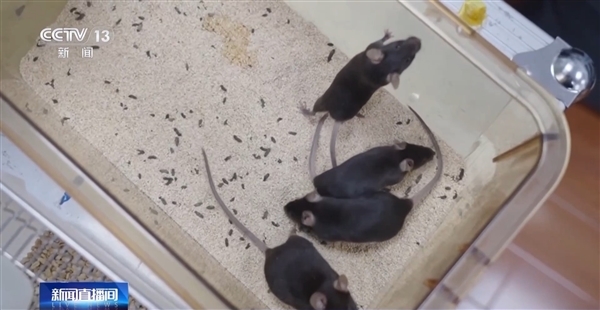
During their time in orbit, the astronauts and ground-based researchers will monitor the mice’s spatial behavior through multi-dimensional video imagery. This will allow for studying the impact of space conditions such as microgravity and confinement on the mice’s behavioral patterns. The insights gained from these experiments are vital for developing critical core technologies for the cultivation and monitoring of small mammals in space. Furthermore, they will provide preliminary exploration into the stress responses and adaptive changes of mice within the space environment, contributing to our broader understanding of biological adaptation beyond Earth.
