
What are these large, McNugget-like objects in my hand? Can you guess?

They are colloquially known as “yellowcake.” This is not a snack, but a crucial raw material in the nuclear industry – sodium diuranate.
Through a series of processing steps, it can be formed into fuel rods, which ultimately are converted into the electricity we use daily.
Today, let’s explore the origins of nuclear fuel – uranium ore – and what it looks like.
Where Does Uranium Ore Come From? What Does it Look Like? Where Does Uranium Originate?
Uranium, with atomic number 92, was born in supernova explosions and neutron star collisions.

About 4.6 billion years ago, it was accreted onto Earth along with the primitive matter of the solar system. There, it formed uranium compounds with elements like oxygen and fluorine, which then evolved into uranium ores through geological processes.

Uranium is actually more abundant in the Earth’s crust than one might think. Its average crustal abundance is about 2.7 parts per million (ppm), meaning there are 2.7 grams of uranium per ton of crustal material. This is comparable to metals like cobalt, nickel, and lead. In contrast, gold has an average crustal abundance of only 0.004 ppm.
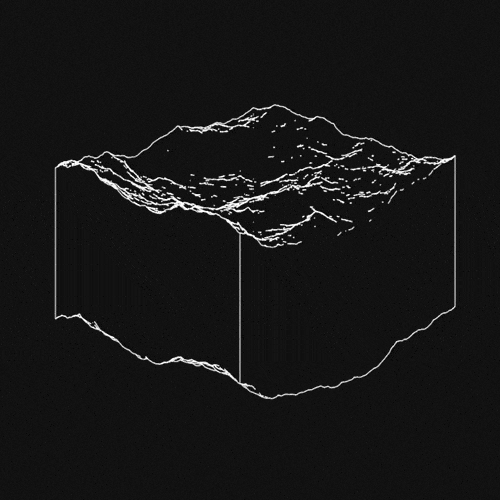

However, for traditional mining, uranium ore is generally considered to have an industrial grade of 0.05%, or 500 grams of uranium per ton of ore. This means it needs to be 185 times more concentrated than the average crustal abundance to be economically viable for extraction. While it’s present in large quantities globally, its dispersed nature makes it challenging to mine.

Uranium is also a chemically reactive element. In its natural state underground, “pure uranium” virtually doesn’t exist; it is always found in compound form.
Common uranium-bearing minerals include uraninite, pitchblende, torbernite, and autunite, among others.

Uranium deposits are found across China, from north to south. Hunan, Guangdong, and Jiangxi provinces primarily have granite-type and volcanic rock-type uranium deposits. Xinjiang and Inner Mongolia mainly have sandstone-type uranium deposits, while uranium resources have also been discovered in Northeast China, Yunnan, Guizhou, and Sichuan.
The uranium mine we are examining today is located in Inner Mongolia, a region known for its vast grasslands and significant uranium reserves.
What Does a Uranium Mine Look Like?
I am currently at the Nalinggou uranium deposit in Darat Banner, Ordos City, Inner Mongolia. This site hosts China’s largest natural uranium production capacity project, the CNNC “Guoyou No. 1” demonstration project, and the yellowcake you saw earlier originates from this very grassland.
However, if I didn’t tell you that mining was taking place here, you would likely never guess. The mine is unlike our typical perception of mining operations; there are no mine shafts in sight, nor any miners. The only visible elements are numerous yellow, green, and blue boxes placed across the grassland.

Let’s take a closer look at how “Guoyou No. 1” extracts uranium from beneath the ground.
These yellow, green, and blue boxes actually represent the mine shafts of “Guoyou No. 1.”
The green boxes indicate injection wells, responsible for injecting the leaching solution into the sandstone-type uranium ore layer.
The blue boxes are extraction wells, tasked with pumping out the liquid that has dissolved the uranium elements.
The yellow boxes, on the other hand, are for monitoring the groundwater environment.
These are arranged in a hexagonal pattern, typically with six injection wells to one extraction well. The spacing between wells is approximately 30 meters.

Each mining area is equipped with a control room responsible for managing the flow rate of the injected and extracted fluids. Surrounding the area are evaporation ponds where any excess treated water is evaporated into the atmosphere.
Not far off, drilling rigs are actively drilling new wells in other mining sections.

This demonstrates the “carbon dioxide + oxygen” in-situ recovery (ISR) process employed by “Guoyou No. 1.” It’s a stark departure from traditional mining methods, characterized by “mining without seeing the mine.”
What we’ve discussed so far covers the visible aspects of the extraction process on the surface. Now, let’s delve into what happens underground, out of sight, to the uranium.
How Does In-Situ Recovery Achieve “Mining Without Seeing the Mine”? What Are the Steps Involved in Transforming Uranium into Yellowcake?
First, boreholes are drilled down approximately 400 meters to reach the uranium ore layer, which contains sandstone and a significant amount of groundwater.
The injection wells introduce carbon dioxide (CO₂) and oxygen (O₂) dissolved in water as leaching agents into the underground strata.

When dissolved in groundwater, carbon dioxide forms a weak acid, which lowers the groundwater’s pH, thereby increasing the solubility of uranium minerals.
Meanwhile, oxygen promotes the oxidation of uranium, converting the low-valent tetravalent uranium (U⁴⁺) in sandstone-type uranium ore to high-valent hexavalent uranium (U⁶⁺).

At this stage, uranium ions gradually dissolve into the leaching fluid. This pregnant solution is then extracted through the extraction wells, channeled via the control room to collection tanks, and then transported through pipelines to a hydrometallurgical plant.
Here, the uranium solution passes through adsorption columns, where the uranium ions are captured by resins. The uranium-laden resin is then moved to a stripping tower, where it is leached with a stripping agent to produce a purified solution.

To this purified solution, hydrochloric acid is added to remove any interfering ions. Subsequently, sodium hydroxide is introduced into a mixing tank. The sodium hydroxide provides hydroxide ions (OH⁻), which react with the uranyl ions to form a sodium diuranate precipitate.
As these precipitates are typically yellow solids, they are then pressed into pellet-like forms, gaining them the name “yellowcake.”

Within the nuclear industry, its actual designation is “111,” representing the final product output from the mining area.

The current international price for natural uranium (U₃O₈) is approximately $70 per pound, which translates to about one million RMB per ton.
Sodium diuranate contains about 70% uranium. As uranium is radioactive, it does emit radiation; however, the radiation levels from natural uranium are minimal. One pound of natural uranium ore releases about 0.02 millisieverts (mSv) per day, which is roughly equivalent to wearing a luminous watch.
Initially, I was also concerned about radiation. An engineer at the mine assured me that as long as one doesn’t mistake it for McNuggets and consume it, and washes hands thoroughly after handling, there’s generally no significant impact.

How is Uranium Converted into Electricity?
Next, this yellowcake is transported to a purification and conversion plant, where it is transformed from sodium diuranate into uranium hexafluoride (UF₆).

From there, it moves to uranium enrichment and fuel fabrication plants to be made into the nuclear fuel rods used in nuclear reactors.

These fuel rods are loaded into nuclear reactors, where they initiate a fission reaction that releases a tremendous amount of thermal energy. This heats water, converting it into steam, which then drives turbines connected to generators to produce electricity.
Finally, this electricity is transmitted to our homes, becoming the power we use daily.

The origin of it all lies in that yellowcake, which is why it’s referred to as the “grain” of the nuclear industry.
On July 12th, China’s largest natural uranium production capacity project, the “Guoyou No. 1” demonstration project, successfully produced its first batch of uranium.
Farmland and Pastures Coexist Harmoniously
A significant advantage of the ISR technology employed by “Guoyou No. 1” is its environmental friendliness.
As you can see, unlike traditional mining that involves excavating vast amounts of earth, this method extracts uranium ore from underground, minimizing surface disruption.
The land used for mining operations is leased from local herders and farmers, ensuring that normal grazing and farming activities are not affected.
The rows of crops you saw around the mining area are corn planted in the spring, just beginning to sprout. By the time they grow taller, even these wellheads will be concealed.

As we were preparing to leave the mining area, we encountered herders moving their sheep. The flock was peacefully grazing in pastures surrounding the wellheads.
Without witnessing it firsthand, it’s hard to believe that agriculture, animal husbandry, and mining can coexist on the same piece of land.

Remote Uranium Extraction – Hohhot Remote Control Center
All the uranium extraction processes we’ve observed can actually be controlled remotely with a single click from the Hohhot Remote Control Center, hundreds of kilometers away.

If the scattered mining areas in Inner Mongolia are the operational arms, then this center serves as the central nervous system.

Within this room, operators can oversee the uranium mining production site hundreds of kilometers away with just a few mouse clicks. This includes activating mining equipment, controlling injection well operations, and viewing real-time data from the wells.
The automation and intelligent control technologies enable highly precise operations. This approach not only enhances efficiency but also significantly reduces the need for manual labor typical of traditional mining operations.
This is particularly important given that mining sites are often located in remote areas with harsh working conditions, making recruitment and retention of staff a significant challenge. The number of young people willing to work at frontline mining sites is increasingly dwindling.

An engineer with over two decades of experience at CNNC shared his personal journey, recalling the era of outdated technology and the immense burden it placed on miners, often forcing families to live apart.
With the advent of automation and remote control technologies, the number of on-site personnel required has drastically decreased, and many tasks previously performed at the physical location can now be managed remotely.

This revolutionary change has shattered the decades-old production model of “people following the mine” and enduring harsh living conditions. It has led to a rocket-like increase in the quality of life and work efficiency for employees, truly making frontline uranium mining a place where people want to stay.
Why is Uranium So Important to Us?
As of the end of 2024, mainland China has 58 operational nuclear power units connected to the grid. Including units under construction, approved, and awaiting construction, there are a total of 102 nuclear power units, with a total installed capacity of 113 million kilowatts, making China the world’s largest in terms of scale.
According to national nuclear power development plans, by 2035, China’s nuclear power installed capacity is projected to reach 150 million kilowatts, positioning the country as a major consumer of uranium resources.
Uranium, much like oil, is considered a strategic resource. It is not only vital for energy supply but also closely linked to national security.

Compared to major uranium-producing countries like Kazakhstan, Australia, and Canada, China faces complex geological conditions for its uranium resources. These deposits are often smaller, lower in grade, unevenly distributed, and present significant extraction challenges.
Therefore, every uranium ore deposit is exceptionally valuable to us.
The Qianjiadian uranium mine in Tongliao, Inner Mongolia Autonomous Region, is a case in point. When it was discovered, experts from Uzbekistan were invited to assess it. After a three-year survey, the foreign experts concluded that the geological conditions at Qianjiadian were too poor for extraction, effectively deeming the mine unviable.

Uzbekistan, being a major uranium producer, possesses extensive theoretical knowledge and practical experience in this field. At the time, the expert’s opinion carried considerable authority.
However, engineers at CNNC were unwilling to abandon any potential opportunity.

Facing technological blockade, they independently developed the third-generation uranium extraction technology, characterized by the “carbon dioxide + oxygen” in-situ recovery process. This innovation has revitalized numerous low-grade sandstone-type uranium resources, bringing previously uneconomical “dormant mines” back to life.

In Summary
In-situ recovery (ISR) mining is likely a relatively unfamiliar term to many. However, this technology holds significant importance for the nation, the ecological environment, and professionals within the nuclear industry.

For the nation, the development of “Guoyou No. 1” signifies a new breakthrough in China’s advanced uranium mining and metallurgy industrial system, with key core technologies achieving independent and controllable status.
For industry practitioners, this technology also enables them to work in a safer and more comfortable environment.

When discussing nuclear power, we often focus on its zero-carbon emission benefits, rarely considering the crucial role of uranium mining that underpins it all.
As a technologically sophisticated but understated field, the significance of in-situ uranium recovery extends far beyond mere technical innovation; at its heart lies a pursuit of sustainable development for humanity.
By replacing traditional extraction methods with in-situ extraction, it offers superior protection for the vast grasslands and farmlands.
In the future, the core technology of “Guoyou No. 1” will be fully applied to uranium resource development in northern China. By 2030, it is expected to support the establishment of new, large-scale uranium mining bases.

The future of China’s nuclear energy is growing green.
