
Initially, “Wicked Cultivation” had been trending for days without much fanfare. However, when the topic surpassed 450 million views on a certain platform, the true extent of this phenomenon became apparent.

From the first sip of juice-stewed meat to life philosophies that deconstruct hardship through absurdity, the participants’ dedication has reached a level that would impress even Voldemort.


If you are a fan of Xianxia novels, the term “Wicked Cultivator” (邪修) might not be unfamiliar. As summarized by a Reddit user, it refers to individuals who deviate from orthodox cultivation paths, embracing dark and forbidden methods for advancement. For instance, they might forcibly absorb others’ cultivation through sinister means like blood sacrifice or soul extraction, essentially taking a shortcut that is shunned by the mainstream, and often serving as the ultimate reason for “evil not triumphing over good” in stories.

However, in modern contexts, “Wicked Cultivation” has transformed into a popular tag within China’s social media landscape, particularly on platforms like Xiaohongshu. The term is now often defined as: “Simplifying complex matters; that lies in its charm.” This reinterpretation highlights a shift from magical, often morally ambiguous, power accumulation to practical life hacks that bypass conventional effort.

The saying “Everything can be wicked cultivated” is more than just a catchphrase. The prevalence of this trend is evident across various online platforms. The goal of “Wicked Cultivation” in cooking is to lower the barrier to entry as much as possible. By omitting traditional steps and ensuring safety, it offers dual benefits. In an era where unconventional methods are rampant, this offers a new perspective on the adage “food is the paramount necessity of the people.”
A prime example is “beverage cooking.” While it’s common knowledge that acidic fruits like kiwi and fermented dairy products like yogurt can tenderize meat, seeing a food blogger pour an entire cup of orange juice into pork ribs still causes a moment of disbelief. Similar techniques include using Yakult for char siu, kumquats and passionfruit for chicken feet, and orange juice for braised pork. Even the beloved soft-serve ice cream can substitute for cream in a genius recipe that had Germans exclaiming, “You Chinese are so f*cking smart!” It’s astonishing how these inexpensive treats are being transformed by culinary innovators.

Beyond peculiar ingredient choices, the cooking methods themselves are equally astounding. Want to cook multiple dishes simultaneously? No problem, just use a single rice cooker. Cooks might even stack ingredients in a nine-layered fashion inside. Upon completion, a simple mix with different seasonings suffices. This “wicked cultivation” approach allows for steaming and stewing concurrently. In ten minutes, one can prepare three dishes, one soup, and two staple foods, with the sheer quantity being intimidating before even considering the taste. Some even prepare ten dishes in one pot if flavor mingling isn’t a concern, simply rinsing the pot with water at the end to create a “high-stock” infused with the essence of all ingredients.

Post-meal, “Wicked Cultivation” extends to desserts with equal ingenuity. Mixing flour into melted ice cream and microwaving for a minute yields a fluffy cake. The variety is immense, potentially creating a “Manchu-Han Imperial Feast” through these unconventional methods. Using a meat grinder for dough, bottled tomato juice for braised beef, and Vietnamese rice paper for brown sugar pearls are just a few examples. As long as one doesn’t scrutinize the origin of the meals, both the cook and the diner can enjoy the experience. This approach, while unconventional, results in a clean kitchen and a satisfied cook, with the sole “victims” being the rapidly working rice cooker and microwave.

Cooking is merely the beginning of this cultural movement. “Wicked Cultivation” has permeated various aspects of life. Take the fervent followers of weight loss, for instance. In the midst of this trend, they’ve rallied believers and developed diverse schools of thought, aiming for total physical transformation. Some adhere to the law of conservation of desire, equating appetite, libido, and sleep. They believe that consuming pornography or prolonged napping can substitute for eating. Others, relying on visual cues, advocate for naked eating or wearing excessively tight clothing to stimulate motivation. The sight of a bulging stomach after a meal or the strain of tight clothing serves as the ultimate impetus for dieting. Then there are the followers of Feng Shui, who believe the southwest corner of the home is linked to weight, thus prohibiting clutter that impedes metabolism. Others firmly believe in “Zhu You Shu” weight loss, chanting a mantra thrice daily to expel body fat through their feet.

Even in fashion, there are “Wicked Cultivation” adherents for effortless beauty enhancement. The painstaking hours of exercise or the discomfort of cosmetic procedures are now replaced by external enhancements. Hip pads for an instant S-curve, “elf ear” stickers claiming to make faces appear smaller, high-elasticity shapewear that can conceal a significant amount of mass, shoulder pads, butt pads, nose pads—the list goes on. Driven by the desire for rapid physical improvement, some fashion-forward individuals are adorned with accessories resembling Achilles preparing for the Trojan War. Upon returning home, they might shed a ton of silicone products.

Fashion styling also benefits from “Wicked Cultivation” formulas. The mantra is: “To appear luxurious, don’t pair basic items with basics.” For example, a basic T-shirt can be paired with leopard print lace wide-leg pants, or basic shorts with a stylish oversized jersey. With sincere effort, even the most ordinary clothes can be transformed.

Image courtesy of @Duolingo
After witnessing this explosion of creativity, a realization emerges, echoing a truth long stated in political texts: “Consciousness has a reciprocal effect on matter.” This has led to the rise of a “Wicked Cultivation” faction that champions zero cost and zero threshold strategies, attracting a new wave of adherents—the power of self-hypnosis and subconscious cultivation. For instance, in weight loss, psychological suggestion is paramount. Some advocate for imagining oneself as a dog, using this potent identity to curb cravings for high-fat, high-salt foods, reasoning that if dogs cannot eat certain foods, neither should they.

Image courtesy of @Duolingo
Corresponding “Wicked Cultivation” methods also exist for posture correction. Those with forward head posture are advised to imagine a pile of excrement in front of their face. For rounded shoulders and hunchbacks, the suggestion is to imagine shooting lasers from their nipples. Those needing to relax their shoulders should envision themselves about to crow like a rooster. Even scoliosis can be treated by using the non-dominant hand for wiping oneself. This emphasis on mental visualization and unconventional actions highlights a significant departure from traditional self-improvement techniques.

Learning is another domain ripe for this “Wicked Cultivation” obsession. Those who struggle with concentration are encouraged to read aloud daily, “I have time-traveled, and the people in this world are troubled by playing on their phones every day. Studying is a crime for them, and I need to secretly study for six hours every day without being discovered.” Some advocate for persona-based learning, suggesting one imagine being a fallen empress or a sophisticated princess faced with English textbooks, thinking, “I study for the revitalization of China.” The ingenious also channel the urgency of showing off into academic motivation, using aesthetically pleasing drinks and upscale cafes, combined with a pragmatic mindset, to efficiently complete daily study tasks.

Image courtesy of @xiaofantuaner
While many are still treating “Wicked Cultivation” as a practical gospel, others have recognized its marketing potential. Beyond the methodologies, the very term “Wicked Cultivation” has become a potent traffic driver. Simply compiling existing “Wicked Cultivation” posts can sustain numerous accounts. This has led to a high degree of homogeneity in content when searching for the term. Marketing accounts are reveling in this, as they no longer need to worry about creating new material; the internet is rife with opportunities for video content. At worst, they can simply re-upload previously edited videos with a “Wicked Cultivation” title. Even products promoted by influencers have seen increased sales when associated with this term.

This mass production of content has led to a decline in the diversity of information on media platforms. While initially novel, the endless repetition of similar posts creates an echo chamber that is arguably more impenetrable than information silos. “Wicked Cultivation” fitness posts often promote “ys” like cursing as a core-tightening trick. Weight loss posts consistently advocate for reduced carbohydrate intake and increased water consumption. Beauty posts predominantly recommend chemical peels and endorse body lotions. When an abstract phenomenon is repeated incessantly, even the most seasoned observer will find it monotonous, leading to a further dilution of information density online. Originally more practical methods are being drowned out by waves of “Wicked Cultivation” content, and the core substance behind this glossy facade is being eroded by traffic and trends. This, perhaps, is the true nature of “wickedness.”

However, just as the principles of all things in the world are unified, while “Wicked Cultivation” may seem like a modification of reality, it is fundamentally no different from previous approaches. Weight loss ultimately involves caloric restriction, and learning begins with fundamental units. Beauty is not achieved through physical hacks but through the timeless trio of “early sleep, ample water, and healthy living.” Even seemingly unreplicable aspects like wealth generation and interpersonal skills follow similar narrative patterns to their predecessors. Therefore, after reviewing these abstract examples, the initial reaction is often: “Can this really work?”
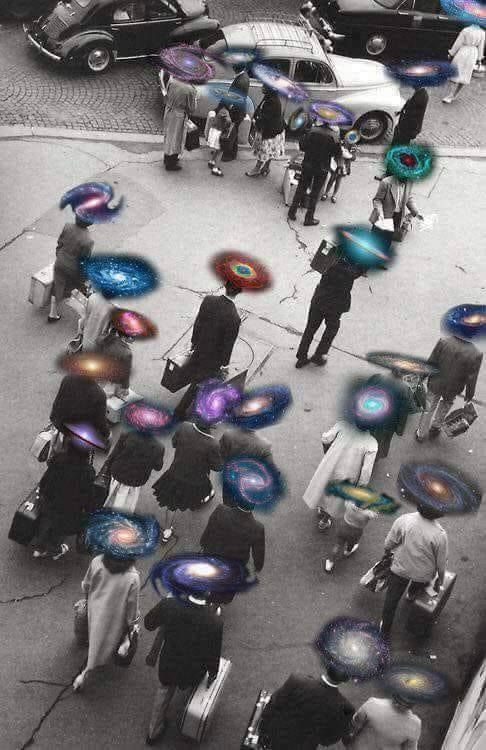

In cultivation narratives, “Wicked Cultivation” often yields similar benefits to orthodox methods. After personally testing a few “Wicked Cultivation” hacks, I must admit: some of these methods are almost comically effective. Yet, akin to classic tropes in Jin Yong’s novels, embracing the demonic path inevitably carries the risk of backlash. For instance, some users complain that the taste of “Wicked Cultivated” meals is even more bizarre than the preparation process. One blogger, after substituting ice cream for cream, tearfully described the experience as “never having tasted such an overwhelming sweetness in my simple life, to the point where it’s suitable for feeding to an enemy.”

Similarly, other areas follow this pattern. A blogger, seeking rapid account growth, fell for a purported “Wicked Cultivation account growth method,” resulting in a seven-day account suspension. These are merely minor consequences of “Wicked Cultivation.” We must pay more attention to the long-term issues that are being sacrificed for speed. For example, some individuals opt for potato chip bags to make thick omelets for convenience, but comments warn that this allows plastic molecules to enter the body and accumulate in areas with poor blood circulation. Those who exclusively drink water for weight loss end up with gastritis, those who use shoulder pads find themselves unable to remove them, and those who practice speed memorization discover they forget information even faster than when they studied diligently. Those who go through elaborate “Wicked Cultivation” processes find that the short-term gains seem to disappear as quickly as they were acquired. The problems solved by taking shortcuts are often temporary, with the actual effects fading shortly after and reversing just as rapidly.

Other domains also reflect this. For instance, some bloggers, in their pursuit of rapid account growth, have fallen for supposed “Wicked Cultivation account growth methods,” leading to their accounts being suspended for seven days. These are merely the minor repercussions. More significant are the long-term issues sacrificed for the sake of speed. For example, some individuals use chip bags to make omelets for convenience, with comments warning that this introduces plastic molecules into the body, which can accumulate in areas with poor circulation. Those who only drink water for weight loss develop gastritis, those who use shoulder pads become dependent on them, and those who engage in speed learning find their retention rate is lower than conventional methods. The efforts invested often yield results that are short-lived, mirroring the speed at which they were achieved.

If we were to define the “Wicked Cultivation” phenomenon in two words, they would be “laziness for speed” and “overtaking from the curve.” Compared to orthodox cultivation methods, “Wicked Cultivation” is highly manipulable, easily achievable by watching a two-minute short video. The reason this topic has become so popular is that regardless of our identity or circumstances, we inherently desire to achieve maximum rewards with minimum effort. Underneath this basic logic, the proliferation of such posts is understandable. Throughout history, humanity has had a love-hate relationship with shortcuts. Whenever new “hacks” emerge, public opinion polarizes into extremes of praise and criticism. On one hand, those who benefit cheer, lauding the brilliance of these methods. On the other, those who don’t understand question their efficacy. The current online frenzy surrounding “Wicked Cultivation” is no different. While some are excited by these novelties, others have voiced their criticisms. Beyond the discomfort associated with the term itself, some argue that promoting “taking shortcuts” fosters impatience and an eagerness for immediate results, thus perpetuating the narrative of “weakening long-termism.”

As negative viewpoints grow, the backlash against “Wicked Cultivation” is perhaps inevitable. However, underlying this phenomenon is the inescapable anxiety that permeates modern life. The monotonous routine, the limited social circles, and the pressures of survival are recurring themes in media. Once people realize their current circumstances are unchangeable, they turn to various methods for temporary escape rather than fundamental problem-solving. Everyone understands that a meal or a skill learned through “Wicked Cultivation” will not be a permanent masterpiece; it serves as a substitute for a proper meal or a fleeting source of novelty. Yet, by engaging in these experiences, people get a glimpse into alternative life paths. It satisfies curiosity and novelty while ensuring psychological and physical well-being. Through these slightly peculiar yet ingenious “Wicked Cultivation” methods, individuals seek a touch of unconventional stimulation in their ordinary lives. Amidst a societal sentiment that life is “boring,” the judicious application of “Wicked Cultivation” offers immediate solace.

Within the Chinese societal context, results have consistently been prioritized over process. From K-12 education to the workplace, people are obsessed with achieving outcomes. This is indeed a common modern predicament. It is noteworthy that the “Wicked Cultivation” trend has emerged during a particularly crowded era. For young people, navigating this period and achieving the traditional milestones of adulthood (marriage, childbirth, homeownership) is becoming increasingly difficult, leading to feelings of disappointment and anxiety. Within this emotional void, the existence of “Wicked Cultivation” paths becomes a symbol of minor success. WGSN, an international consulting firm, states in its report “Lifestyle Strategies: Youth Milestones” that data and numerous observed phenomena indicate that the current generation of young people has shifted from defiance to acceptance, generally experiencing a sense of subdued frustration. Unlike the aspirational drive of previous generations, they understand that upward mobility or bridging the wealth gap might be unattainable in their lifetime. Consequently, they have abandoned grand ideals, and young people globally are seeking a sense of accomplishment in smaller endeavors such as cooking and weight loss.

WGSN refers to achievements akin to “Wicked Cultivation” as “micro-moments,” signifying seemingly small yet emotionally significant instances. Young people attempt to string these micro-moments together to quantify success, substituting for traditional markers like homeownership or marriage. The abstract events of “Wicked Cultivation” are likely the pragmatic responses of individuals facing constraints of time and money. “Choose life” is a classic line from “Trainspotting,” which I interpret as “You could have made countless choices.” Under this ideological current, the negative impact is that the blind pursuit of success has become a habit. We are like riders on a self-balancing scooter, constantly moving forward without remembering our original intention.

At this point, it might be beneficial to reconsider the reasons for searching for these methods: using beverages to stew meat stems from a desire for delicious food, obsession with extreme dieting and fashion hacks is about enhancing appearance, imagining different personas is for effective learning. Ultimately, it’s about adding another layer of meaning to life. While “Wicked Cultivation” can expedite life, an overly hasty mindset often leads to diminished perception. This reminds me of Friedrich Nietzsche’s quote: “Do not climb upon the whole mountain, nor stand at the foot. From the middle height the world is most beautiful.”
