
As the release of the iPhone 17 series approaches, numerous leaks have surfaced online. One particularly noteworthy piece of information suggests that the iPhone 17 Pro will feature a battery with a new shape, and crucially, that there will be a difference in battery size between the US and Chinese domestic versions. This revelation has sparked considerable discussion, with many speculating about Apple’s intentions behind such a design choice.
Why the Notable Difference in US and Chinese iPhone 17 Battery Sizes?
According to leaked images, the US version of the iPhone 17 Pro will entirely adopt eSIM technology, eliminating the physical SIM card slot. This change frees up more internal space within the phone. Apple’s engineers have taken advantage of this space by designing a wider battery for the US models.
In contrast, the Chinese domestic version of the iPhone 17 Pro will still retain the physical SIM card tray. This necessity dictates that the battery’s lower-left corner must be accommodated differently, resulting in a slightly shorter overall length compared to the US version and a more compact side profile.


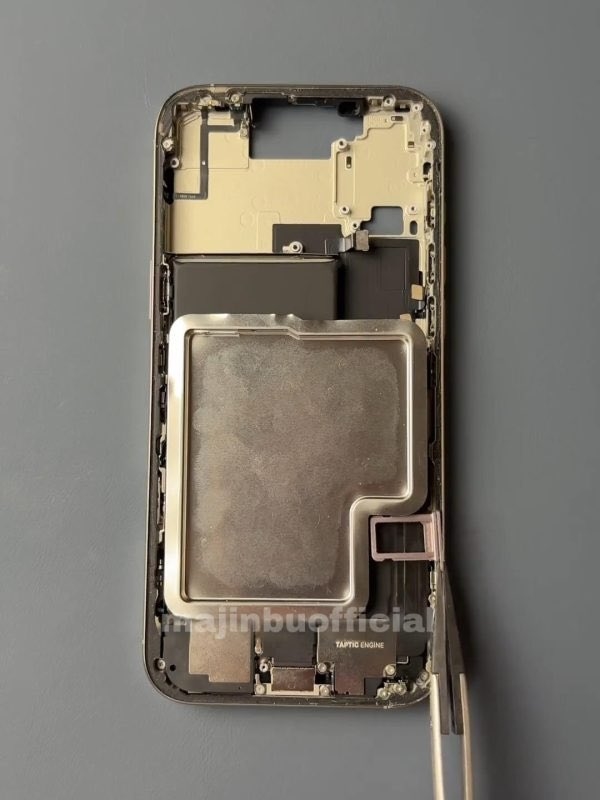
So, why would Apple implement such a differentiated battery design for different markets? This strategic decision is primarily driven by considerations of varying user habits and prevailing market policies in different regions.
In the United States, the adoption rate of eSIM technology is relatively high, with consumers showing less dependence on physical SIM cards. By fully embracing eSIM, Apple not only simplifies the internal structure of its phones but also creates additional room for other components.
Conversely, in the Chinese market, physical SIM cards remain the dominant form of mobile connectivity. To cater to the domestic consumer’s preference and continued reliance on physical SIM cards, Apple is compelled to make design concessions in its battery layout to ensure the phones align with established usage patterns in the Chinese market.
What is eSIM?
eSIM, which stands for embedded SIM, offers several advantages over traditional physical SIM cards. Firstly, eSIMs do not occupy valuable internal space within a smartphone, which allows manufacturers more flexibility in designing the phone’s internal architecture. This saved space can be utilized for larger batteries, improved cooling systems, or the integration of additional features.
Secondly, eSIMs offer enhanced convenience. Users no longer need to perform the often fiddly process of inserting and removing physical SIM cards. Instead, they can easily switch carriers or change their service plans directly through the network. Furthermore, eSIMs are generally considered more secure, mitigating the risk of SIM card theft or cloning.
However, established user habits of relying on physical SIM cards mean that some consumers remain cautious about eSIM technology, with concerns about its stability and compatibility.

Concluding Thoughts
Currently, several major Chinese mobile carriers are actively piloting eSIM technology, conducting tests with specific user groups and in particular business scenarios in various cities. This effort is aimed at accumulating experience for the broader rollout of eSIM. On the device side, there is positive news from Huawei, with reports suggesting the upcoming release of their eSIM-compatible smartphones, which is expected to inject new vitality into China’s eSIM market.

On one hand, the proactive development by major smartphone manufacturers in adopting eSIM technology will foster the growth of related industries, potentially lowering technical costs and enhancing product stability and compatibility.
On the other hand, Chinese carriers are actively exploring various application scenarios and business models for eSIM services, which could lead to more diverse offerings for users in the future. For consumers, the possibility of a dual-mode experience, supporting both physical SIM cards and eSIMs simultaneously on a single device, is on the horizon. This would significantly enhance user flexibility and convenience, allowing them to choose their preferred connectivity method based on their individual needs.
The variation in battery size between the US and Chinese versions of the iPhone 17 series represents a thoughtful design choice by Apple, tailored to the specific market conditions. The future outlook for eSIM technology remains robust, and it is anticipated that eSIM will soon see wider adoption within the Chinese smartphone market.

