
The highly anticipated BMW M3 Touring has officially opened for pre-orders, with the first batch of vehicles expected to arrive by the end of the year. This introduction to the Chinese market is a stark contrast to the hybrid M5 Touring launched last year, which faced considerable criticism for its hefty 2.5-ton curb weight. The M3 Touring, on the other hand, seems poised for a smoother reception.
Equipped with M Performance carbon fiber kits, forged wheels, and carbon-ceramic brakes, the M3 Touring boasts a 3.0T inline-six engine producing 530 horsepower. Its 0-100 km/h acceleration time of 3.6 seconds matches that of the much heavier M5 Touring. A notable functional advantage over its larger sibling is the separately opening rear tailgate window.

Early indicators are positive, with some dealerships already reporting three orders and celebrating the promising start. This enthusiasm is not solely confined to Bimmer enthusiasts; rather, it reflects a broader automotive trend. BMW’s exploration into new materials could potentially lead to more accessible pricing for performance upgrades in the future.
In a significant announcement earlier this year, BMW revealed its intention to replace carbon fiber with flax fiber materials in mass-produced vehicles as part of its strategy to reduce carbon emissions. Yes, you read that correctly – the raw material is the same flax commonly used in clothing and home textiles.
If this initiative scales successfully, it’s plausible that consumers might soon have access to components that were once exclusively the domain of high-performance, carbon-fiber-clad vehicles, but at a more attainable price point.

BMW has been actively testing the viability of this material in their motorsport endeavors. For instance, during the 2019 Formula E season, flax-based materials were incorporated into the cooling shafts of their racing cars.
This year’s M4 GT4 race car represents a more extensive integration, with BMW replacing nearly all carbon fiber components with flax-based fabrics. This includes parts like the dashboard, center console, hood, diffuser, doors, and rear wing.

The interior of the GT4 prominently features flax fiber materials, visible in its distinctive yellow accents.

If the performance of the current M4 race car proves successful, it’s highly probable that this material will be integrated into future Mpower production models. This could even extend to M package options for standard vehicles, allowing a broader customer base to experience these advanced materials.

The rise of flax as a high-performance material is strongly linked to BMW’s recent investment in Bcomp, a new advanced materials company.

Founded in Switzerland in 2011, Bcomp initially focused on developing lightweight yet durable materials for skis, a sport popular in its alpine surroundings. The growing environmental consciousness in Europe at the time fueled Bcomp’s research into plant-based fibers.
Ultimately, they settled on flax, a readily available crop in Europe. Notably, Europe accounts for 65%-70% of global flax production, making it an abundant and potentially cost-effective resource.

The inherent toughness of flax fabric, compared to conventional textiles, is a well-known attribute. Academic research, such as that conducted by Professor Zhi Xudong at Harbin Institute of Technology, highlights the “sandwich” like structure formed by pectin, cellulose, and lignin in flax fibers. This composition contributes to excellent impact resistance and damping properties.
For high-frequency activities like skiing, flax composite materials can help mitigate leg fatigue, an advantage that carbon fiber does not inherently offer. Furthermore, flax fiber’s density of 1.4 g/cm³ is lower than carbon fiber’s 1.8 g/cm³. This means that, in terms of weight reduction alone, flax can even outperform carbon fiber, assuming similar strength characteristics.
As a result, flax fibers are being utilized in the core of certain skis.

The successful application of flax in skis has inspired Bcomp to explore its use in a variety of products, including skateboards, surfboards, flax guitars, and even luxury watches by Hublot.


The “Dieselgate” emissions scandal involving Volkswagen in 2015 served as a major catalyst for Bcomp’s entry into the automotive industry. The scandal, which led to significant repercussions for the entire automotive sector, spurred a widespread shift towards electrification and a heightened focus on environmental sustainability.
Seizing this opportunity, Bcomp began to actively penetrate the automotive market. By 2016, they participated in the Stuttgart Exhibition for Automotive Interiors, and in 2017, they successfully closed their Series A funding round, raising 3 million Swiss francs.
Following this, luxury brands such as Porsche, McLaren, Aston Martin, and Polestar began collaborating with Bcomp. The interior of the Polestar concept car, for instance, features Bcomp materials.

BMW’s investment in Bcomp further solidifies flax fiber’s growing prominence in the industry. However, for flax fiber to truly rival carbon fiber and become universally accessible, several challenges need to be addressed.
Foremost among these is the performance gap. Flax fibers typically have a tensile strength of around 1300 MPa, whereas carbon fibers are measured in GPa. For example, the common T700 grade boasts a tensile strength of 5 GPa, making it approximately three times stronger than flax fiber.
Consequently, to achieve comparable strength, more flax fiber material is generally required. McLaren’s experience with their F1 car provides a case study.
In 2020, McLaren partnered with Bcomp to develop the first natural fiber racing seat for Formula 1, which debuted at the 2021 British Grand Prix.

However, their technical analysis revealed that F1 regulations impose a minimum driver equipment weight of 80 kg, encompassing helmets, seats, and boots. Due to Daniel Ricciardo’s (72 kg) heavier build compared to Lando Norris (68 kg), Norris’s seat could afford to be lighter, incorporating more flax fiber for environmental benefits while maintaining structural integrity. Ricciardo’s seat, conversely, still relied on carbon fiber for its outer shell, with a minimal flax fiber layer as a core insert.
The distinction between Ricciardo’s (left) and Norris’s (right) seats illustrates this difference.

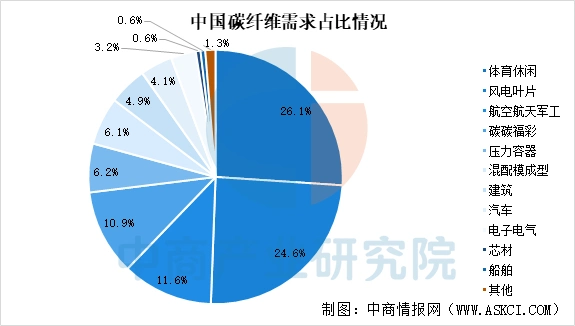
This example from the extreme environment of F1 underscores that flax fiber materials, at present, have not reached the strength levels of carbon fiber. Their application remains largely confined to aesthetic and interior components, with safety-critical elements like monocoques and driveshafts still beyond their reach. Furthermore, the extensive use of carbon fiber in sectors like wind energy and aerospace highlights its unparalleled performance in demanding applications.
Another significant hurdle is the currently high labor cost associated with producing flax fiber components. The manufacturing process typically involves weaving flax fibers into fabric, followed by manual application of these fabrics. This is then combined with epoxy resin and cured in an autoclave for several hours, a process mirroring that of carbon fiber component production.

This labor-intensive process, similar to the production of carbon fiber hoods seen on vehicles like the Xiaomi SU7U, is time-consuming and costly. Bcomp has stated that the raw material cost of flax fiber is 30% lower than carbon fiber, but they remain silent on labor and equipment expenses. This suggests that Bcomp and BMW’s emphasis on flax fiber is primarily on its environmental benefits rather than cost reduction.

Frankly, if flax fiber components continue to be positioned as a premium product, they are likely to remain a niche offering, much like carbon fiber. Bcomp has experienced this firsthand with their acoustic guitar venture, Blackbird, where guitars priced at $2,000 struggled to compete with similarly constructed Chinese guitars costing around $100.
Therefore, it is crucial for BMW and Bcomp to not only implement flax fiber in their high-end models but also to rapidly democratize its use across a wider range of vehicles. Broad consumer adoption is the key to genuinely displacing carbon fiber from its established position.
Otherwise, consumers might find themselves paying the same price for components that offer environmental credentials but minimal cost savings for the manufacturer, potentially treating consumers as a means to achieve cost efficiencies rather than genuine widespread benefit.
