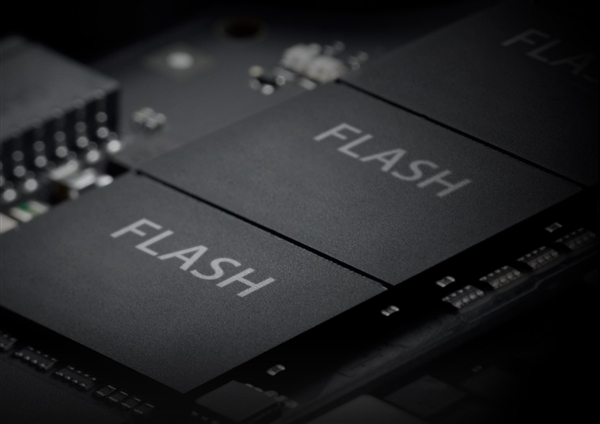
As of September 26th, the increasing prices of storage chips have become a common topic. Beyond DRAM memory, the rise in NAND flash prices is inevitably driving up SSD costs, with QLC flash being the primary driver of this trend.
The reasons behind this price hike are not complicated. The fundamental cause stems from the burgeoning demand from the AI market. Large AI models, with their trillions of parameters, not only require substantial memory and VRAM but also place immense storage pressure on hard drives. QLC, with its current balance of capacity and cost, stands out as the go-to choice for storage solutions.
According to information from the supply chain, this price increase is accompanied by a surge in demand for ultra-large capacity SSDs of 120TB and above. Manufacturers are actively assessing order volumes for 2026 and strategically adjusting their production capacity allocation towards QLC flash. This strategic shift indicates a significant market reorientation driven by the needs of large-scale data storage for AI applications.
Upstream chip manufacturers have already taken proactive steps. In August, SK Hynix announced the world’s first mass production of 321-layer stacked flash memory, with QLC being the initial offering instead of the previously dominant TLC. This move clearly signals their preparation for the demands of the AI market, where higher density and cost-effectiveness are paramount.
In addition to SK Hynix, major players like Samsung, Micron, Toshiba, and SanDisk are also expected to increase their proportion of QLC flash production. Samsung, in particular, is making a significant shift, as its V9 generation of flash memory is now slated to be primarily QLC, a departure from the V8 generation which did not feature QLC.
However, Samsung faces a potential setback with its V9 QLC flash, which is reportedly experiencing production issues, delaying mass production until early next year. This presents an opportunity for SK Hynix, which has taken a lead of nearly half a year, potentially challenging Samsung’s long-standing position as the memory chip leader in the coming quarters.
LS Securities forecasts that SK Hynix and its joint venture Solidigm are poised to achieve over 50% market share in the QLC segment, reaching 51% next year, a substantial increase from their current 45% share. This projection underscores the growing dominance of QLC and the strategic advantage SK Hynix holds in this rapidly evolving market.