
For anyone planning to purchase a new energy vehicle, the choice between lithium iron phosphate (LFP) batteries and ternary lithium-ion batteries is almost an unavoidable question.

Just a few years ago, there was an unspoken hierarchy. High-end vehicles exclusively used ternary lithium-ion batteries, emphasizing a sense of exclusivity. If a flagship model dared to feature LFP batteries, it would likely face severe criticism from online commentators.
Conversely, LFP batteries were almost exclusively associated with lower-end vehicles and ride-sharing fleets, implying a compromise in quality.
It’s important to recall that in 2019, ternary lithium-ion batteries held a market share of up to 65% of new car sales, suggesting a prevalent sentiment that one should invest in ternary lithium-ion batteries if possible, despite the higher cost.


However, in just a few years, the landscape has drastically changed. LFP battery installations have surpassed 80%, pushing ternary lithium-ion batteries down to less than 20%.
Today, the price or brand prestige of a vehicle no longer dictates the battery choice; LFP batteries are now widely adopted across all segments.
For instance, the Yangwang U8, priced at over a million yuan, and even the standard and Pro versions of the Xiaomi SU7 have embraced LFP battery technology. This signifies a significant shift in perceived value and technological acceptance.
Remarkably, there have even been instances of consumers paying an additional premium of 15,000 yuan to “upgrade” from ternary lithium-ion to LFP batteries, a complete reversal of the previous trend.

Why have LFP batteries so rapidly overtaken ternary lithium-ion batteries, once considered a premium choice, in just a few short years?
A closer examination reveals that the ascent of LFP batteries has been anything but straightforward.
One of the most significant differentiating factors between these two battery types lies in their fundamental composition.
Ternary lithium-ion batteries, as the name suggests, derive their cathode material from three key elements: typically nickel (Ni), cobalt (Co), and manganese (Mn).

Regardless of recipe variations, these three metals form the core components.
However, it’s less commonly known that the global reserves of nickel are approximately 11 million tons, with over half located in the Democratic Republic of Congo. Cobalt is primarily sourced from Indonesia. Any disruption in the supply of these critical metals can have significant global repercussions.
Consequently, the price of ternary lithium-ion batteries is considerably higher than that of LFP batteries, which utilize abundant global resources like phosphate and iron ore. Given that batteries represent a substantial portion of an electric vehicle’s cost, this price difference is a critical factor.
Therefore, from its inception, the LFP battery inherently possessed a cost-saving advantage.
In the context of China’s highly competitive new energy vehicle market, the preference for LFP batteries to reduce costs appears logical.

So, why were automakers not prioritizing cost savings earlier?
In the early days of China’s new energy vehicle industry, government subsidies were directly linked to battery energy density. Ternary lithium-ion batteries, despite their higher cost, offered superior performance, allowing manufacturers to qualify for these subsidies.
Automakers used these subsidies to offset the increased costs, making the use of ternary lithium-ion batteries financially viable. However, as subsidies began to phase out starting in 2022, and manufacturers had to bear the costs directly, the market dynamics shifted.
Some might argue that low cost is irrelevant if it compromises range, a primary concern for EV owners. This is a valid point, as ternary lithium-ion batteries still generally outperform LFP batteries in terms of energy density.

With higher energy density, ternary lithium-ion batteries allow for larger battery packs in the same vehicle chassis. Alternatively, for battery packs of the same size, ternary lithium-ion batteries store more energy.
Furthermore, ternary lithium-ion batteries exhibit superior performance in cold weather. At -20°C, they can theoretically discharge over 70% of their capacity, whereas LFP batteries might only achieve over 50%.
In the past, drivers of LFP-equipped vehicles would experience significant range anxiety in winter, with the displayed range plummeting rapidly, making even using the air conditioning a cause for concern.
Consequently, the perception was that vehicles with ternary lithium-ion batteries simply offered longer driving ranges.
However, over time, a different reality began to emerge.

The highly active chemical properties of ternary lithium-ion batteries that enable high energy density come at the cost of being quite delicate. Overcharging or over-discharging can lead to the release of oxygen atoms, damaging the internal structure and potentially causing thermal runaway.
The risk of combustion for ternary lithium-ion batteries is alarmingly high, with a reported speed of 5 kg per second. This inherent instability necessitates careful management.
To mitigate these risks, automakers typically employ sophisticated Battery Management Systems (BMS) to artificially limit the operating range of ternary lithium-ion batteries. They also advise owners to avoid charging to 100% regularly, recommending charging to 80%-90% for daily use.
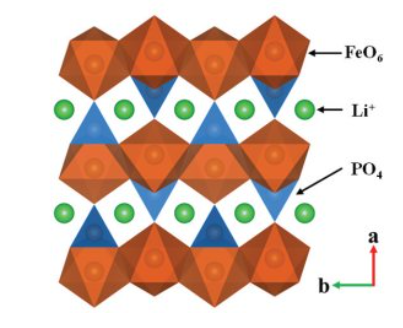
LFP batteries, on the other hand, benefit from the stable olivine structure of their internal composition. They offer excellent thermal stability, resistance to overcharging, and a significantly longer cycle life, making them a more robust choice.
This robustness means LFP battery vehicles can generally be charged to full capacity without concern, and charging speeds can be significantly optimized.
For example, advancements like CATL’s second-generation Shenxing battery and BYD’s fast-charging technology enable charging speeds that can add 400 kilometers of range in just five minutes.
This means while a ternary lithium-ion car with a stated range of 600 kilometers might only offer a usable range of 300 kilometers (50% of its stated capacity), an LFP car with a stated range of 500 kilometers, allowing for full charge and discharge, could provide nearly 450 kilometers of actual usable range.
Consequently, when both types of vehicles visit a fast-charging station, an LFP car might be fully charged and already on its way home, while a ternary lithium-ion vehicle might still be waiting to replenish its energy.
This comparison highlights how, in practical usage scenarios, LFP batteries not only match but can even surpass ternary lithium-ion batteries in terms of charging convenience and usable range.

Moreover, LFP battery manufacturers have introduced innovative solutions to overcome their inherent limitations.
BYD, for instance, has developed pulse self-heating technology. This system uses high-frequency pulse currents to internally heat the battery cells, akin to rubbing one’s hands for warmth. Within minutes, the battery can reach its optimal operating temperature, effectively mitigating LFP’s performance degradation in cold conditions.
Even the weight disadvantage of LFP batteries has been addressed. Companies like CATL have adopted CTP (Cell-to-Pack) technology, which streamlines the traditional “cell-module-pack” structure by eliminating the intermediate module. This direct integration of cells into the battery pack reduces weight and improves space utilization, effectively increasing the energy density of LFP batteries.

However, LFP batteries do have some limitations.
For example, manufacturers of vehicles equipped with LFP batteries often recommend periodic full charging to facilitate accurate battery calibration by the BMS, as otherwise, the displayed charge level might become inaccurate.
Yet, the resurgence of LFP batteries seems to extend beyond purely technical advancements.
One might notice that many of these innovative LFP battery technologies originate from Chinese companies like BYD and CATL, while established overseas manufacturers like LG and Panasonic appear to be taking a more passive role. This observation points to a critical factor in LFP’s triumph: its alignment with China’s burgeoning new energy vehicle industry.
While LFP battery technology was discovered in 1996 by Professor John Bannister Goodenough at the University of Texas, international companies initially showed little interest.

As previously mentioned, LFP batteries have a lower theoretical energy density and poorer cold-weather performance, making them seem less appealing and “underperforming” from a purely technical standpoint.
Conversely, the impressive theoretical specifications of ternary lithium-ion batteries captivated foreign automakers and researchers. Major overseas battery manufacturers like LG, Samsung, and Panasonic heavily invested in ternary lithium-ion technology, as well as more advanced solid-state and high-nickel batteries, viewing them as the future of electric vehicle power.
Their focus was on achieving breakthroughs in material chemistry, aiming to enhance ternary lithium-ion batteries and believing this represented the path forward for high-tech, premium, and future-oriented new energy solutions.
Meanwhile, China astutely recognized that instead of solely pursuing incremental gains in theoretical range, LFP batteries, with their sufficient practical range and lower cost, could significantly accelerate the adoption of new energy vehicles by making them more accessible to a broader consumer base.

As a result, while overseas manufacturers anticipated a “technological explosion,” Chinese engineers, through relentless structural innovation and system integration, successfully transformed the “underperforming” LFP battery into a leading technology. This is how LFP achieved its remarkable comeback.
When they eventually realized the shift, international companies were left surprised.
The entire LFP battery industry chain, from upstream material production to midstream cell manufacturing and downstream patent technology, has been largely dominated by Chinese enterprises.
Currently, China accounts for over 95% of the global LFP battery production.
Further examination of the supply chain reveals that almost 100% of LFP cathode materials are produced by Chinese companies. Moreover, Chinese enterprises hold a leading position in patent filings related to crucial technologies such as battery structure innovation and thermal management.
This dominance has prompted foreign companies to invest heavily in building LFP battery manufacturing facilities in recent years.
For instance, Ford announced plans in 2023 to build an LFP battery plant, and LG recently secured a significant LFP battery order worth over 30 billion yuan from Tesla, highlighting the global demand and China’s pivotal role.

However, beneath these seemingly independent investments, Chinese influence remains profound.
For example, Ford’s planned plant utilizes technology from CATL, and LG’s cathode material suppliers include domestic Chinese companies like Longpan Technology and Huayou Cobalt.
Even Panasonic, seeming to cling steadfastly to the ternary lithium-ion path, is notably absent from the major LFP developments.
In conclusion, the LFP battery’s success is not attributable to a single factor but rather represents an intermediate yet crucial stage in the transition to a fully electrified era.
While some may believe that the future unequivocally belongs to next-generation batteries, it is also evident that the potential of LFP batteries is far from being fully realized.
Perhaps the fundamental question is not about battery technology itself, but rather about economics.
Ternary lithium-ion batteries, despite their superior chemical properties, come with high costs and delicate handling requirements. This has led to their association with “premium” and “expensive” vehicles, positioning new energy cars as luxury items for a select few and hindering the broader transition to new energy transportation.
In contrast, the emergence of LFP batteries, with their cost-effectiveness and robust nature, has truly paved the way for the widespread adoption of electric vehicles.
Therefore, it seems that in the future, the crucial attributes for electric vehicle power batteries, beyond impressive performance figures, will be affordability and durability.
Ultimately, what defines a truly great technology is not its theoretical maximum potential, but its broad accessibility and practical utility for the masses.
