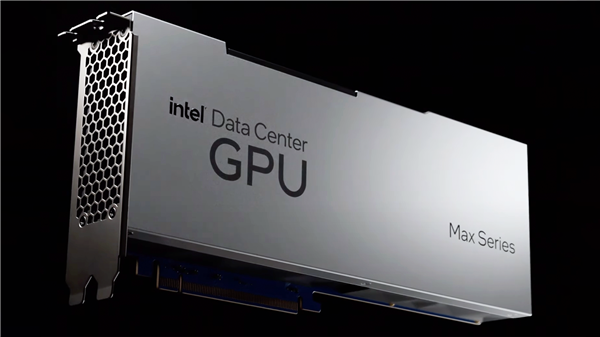
On October 12th, according to a report from [News Source Name], during the recent Intel Tech Tour US event, Intel released version 1.3.3 of XPU Manager. This new version marks a significant shift in Intel’s strategy, as it no longer supports the Data Center GPU Max and Flex series.
XPU Manager is a dedicated tool designed for the management and monitoring of Intel’s data center GPUs. Its core objective is to simplify operations, enhance system reliability, and optimize the utilization of these powerful accelerators. The tool provides a command-line interface and various APIs, facilitating GPU discovery, reporting of associated information, firmware updates, topology and grouping management, comprehensive telemetry and health monitoring, and the configuration of diverse GPU policies and settings.

With the introduction of XPU Manager 1.3.3, the Intel Data Center GPU Flex and Max series are now considered legacy products. Users relying on these GPUs are strongly advised to migrate to the earlier XPU Manager 1.2 series to ensure continued compatibility and access to necessary management functionalities. This strategic move suggests Intel is focusing its software development and support on its newer GPU architectures.

Currently, the only officially supported graphics processor by XPU Manager is the recently launched Arc Pro B60. While the Arc Pro B50 was not explicitly mentioned in the announcement, it is theoretically expected to be supported as a new product within the same lineup.
Beyond deprecating the Data Center GPU Max and Flex series, XPU Manager 1.3.3 introduces several other enhancements. These include added support for SR-IOV vGPU commands, power limit monitoring capabilities on Windows, a PCIe Gen4 downgrade option, and various other performance and stability improvements. The focus on new features for the Arc Pro series indicates Intel’s commitment to driving adoption and providing robust management for its latest professional graphics solutions.