According to the latest investigation by TrendForce on October 14th, the rapid advancement of AI inference has led to a burgeoning demand for instant access and high-speed processing of vast amounts of data. This surge is compelling both traditional Hard Disk Drive (HDD) and Solid-State Drive (SSD) manufacturers to accelerate the production of high-capacity storage solutions.
The current significant supply deficit in the HDD market is acting as a powerful catalyst for NAND Flash manufacturers. They are expediting their technological transitions to focus on producing ultra-large capacity Nearline SSDs, with capacities reaching 122TB and even 245TB. This strategic shift is crucial for alleviating uncertainties surrounding future demand and ensuring market stability. The drive towards larger capacity SSDs is not merely a response to current shortages but a proactive measure to reshape the storage landscape. By investing aggressively in higher density NAND Flash technology, these manufacturers are positioning themselves to capture a larger share of the burgeoning data storage market, driven by AI and data-intensive applications.
TrendForce points out that the HDD industry is currently navigating a period of technological transition. The substantial initial investment required for new Heat-Assisted Magnetic Recording (HAMR) production lines presents a significant bottleneck in capacity expansion. Consequently, and perhaps inevitably, suppliers are compelled to pass these increased costs onto their customers.
This has resulted in an increase in the average price per gigabyte, rising from the range of $0.012-$0.013 to $0.015-$0.016. This escalation inherently weakens the HDD’s most critical competitive advantage: its cost-effectiveness for bulk storage. As AI’s data processing demands grow, the price sensitivity of large-capacity storage becomes more pronounced, making incremental cost increases a significant deterrent for widespread adoption of traditional HDDs.
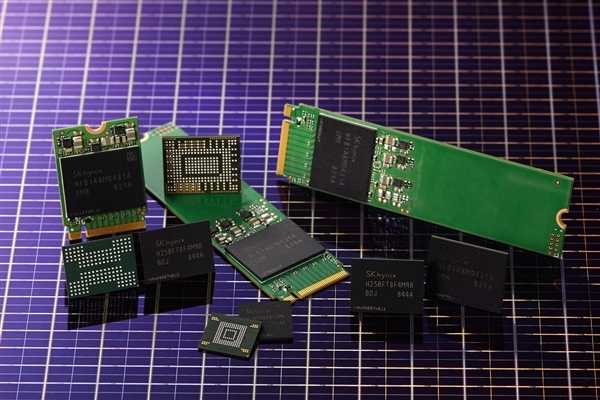
In contrast, NAND Flash technology is continuously evolving through advancements in 3D stacking. The pace of capacity enhancement in NAND Flash is significantly faster than that of HDDs. Projections indicate that by 2026, the output of 2Tb QLC chips will progressively increase, playing a pivotal role in reducing the cost of Nearline SSDs. This rapid technological advancement and scalability offer a clear path to more affordable, high-capacity storage solutions, directly addressing the limitations faced by HDDs.
TrendForce further elaborates that while the HDD industry may see some cost optimization once HAMR production lines are fully upgraded and economies of scale are achieved, NAND Flash possesses inherent structural advantages in terms of cost reduction speed and capacity expansion flexibility. The modular nature of NAND Flash manufacturing and ongoing innovation cycles allow for quicker adaptation to market demands and cost efficiencies that HDDs, with their more complex single-drive architectures, struggle to match.
For NAND Flash suppliers, who have long sought diversification beyond the demands of smartphones and PCs, the Nearline SSD market represents a welcome opportunity, akin to “manna from heaven in a long drought.” It is an ideal juncture to displace HDDs from their long-held dominance in large-capacity storage. The convergence of AI-driven data growth and the inherent scalability of NAND Flash technology creates a compelling scenario for NAND Flash to make significant inroads into enterprise storage solutions, offering a compelling alternative to the traditional HDD paradigm.
Therefore, the investment focus is shifting towards QLC products with higher density and larger capacities. This strategic pivot not only aims to fulfill current orders but also strategically positions these manufacturers to contend for dominance in the data center storage architecture over the next decade. The pursuit of higher capacity and greater efficiency in NAND Flash technology is a testament to its adaptability and its position as the future of high-volume data storage.