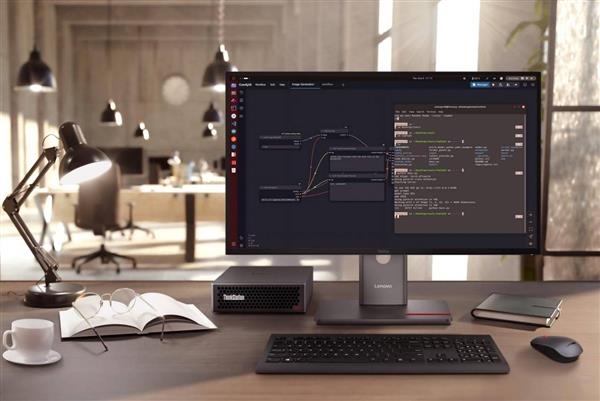
NVIDIA announced on October 15th that the world’s smallest AI supercomputer, DGX Spark, has officially begun delivery, with a starting price of $3,999 (approximately 28,500 RMB).
With the shipment of DGX Spark, NVIDIA’s partners, including major manufacturers such as ASUS, Gigabyte, MSI, Acer, Dell, HP, and Lenovo, have launched models based on this platform. These systems are all equipped with the GB10 Grace Blackwell super chip, a collaborative design between NVIDIA and MediaTek.
DGX Spark offers 1 petaFLOPS of AI performance and 128GB of unified memory. This ample processing power allows developers to perform inference on models with up to 200 billion parameters locally and fine-tune models with up to 70 billion parameters. This capability is crucial for handling increasingly complex AI models that are becoming standard in fields like natural language processing and advanced computer vision.
Furthermore, it integrates NVIDIA ConnectX-7 200 Gb/s networking along with NVIDIA NVLink-C2C technology, enabling the connection of two AI supercomputers. This interconnectivity is vital for scaling AI workloads that require distributed computing resources, significantly accelerating training times for large-scale research projects.
ASUS’s Ascent GX10 features an optimized cooling system and offers a variety of localized elastic storage options, including 1TB and 2TB M.2 NVMe PCIe 4.0 x4 SSD versions, with a 4TB M.2 NVMe PCIe 5.0 x4 SSD version soon to be available. The focus on advanced storage solutions like PCIe 5.0 indicates a commitment to reducing data I/O bottlenecks, a common performance inhibitor in AI workloads.
Gigabyte’s AI TOP ATOM presents versions with expandable SSD storage up to 4TB, catering to users who need substantial local data storage for extensive datasets. MSI’s EdgeXpert uniquely combines high performance with a lightweight design, making it suitable for edge AI applications or scenarios where portability is a consideration.
Acer’s Veriton GN100, launched just last month, also joins this competitive landscape, adding a new growth driver for Acer in the AI domain. The timely introduction of this model suggests Acer is actively adapting to the growing demand for compact AI computing solutions.
Dell’s Dell Pro Max, HP’s ZGX Nano G1n, and Lenovo’s ThinkStation PGX are also adding new products to their respective companies’ portfolios of AI development hardware and software solutions. The participation of these established PC manufacturers signifies a broad industry trend towards democratizing AI development, making powerful AI hardware more accessible across various professional sectors.