
On October 27, according to Kuaitech, Chinese Ministry of Foreign Affairs spokesperson Mao Ning shared China’s “artificial sun” project with the world on October 25. The project is expected to be completed in 2027 and aims to become the first device in human history to achieve fusion power generation.
The engineering assembly commencement ceremony for the BEST (Burning Experimental Superconducting Tokamak) device took place in May this year at the integrated research facility park for key systems of the fusion reactor host, located in Hefei, Anhui province.

On October 1st, a key component of the BEST device, the vacuum vessel base, was successfully manufactured and delivered, and has been precisely installed within the device’s main hall. This installation marks a new phase in the main engineering construction of the BEST project, expediting component development and engineering installation.
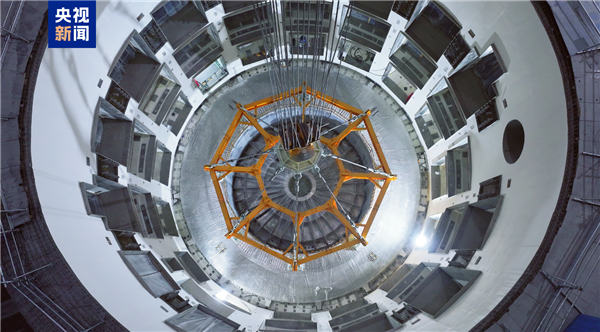
The BEST device, a Burning Experimental Superconducting Tokamak, utilizes compact high-field superconducting tokamak technology. It employs advanced technologies such as high-performance superconducting magnets, high-power neutral beam injection heating, and deuterium-tritium fusion fuel. This will be the first time internationally that net energy output from fusion is verified in a realistic fuel environment, demonstrating fusion power generation. This technological leap holds the potential to unlock a new era of clean energy. By achieving net energy gain in a controlled fusion reaction, China is not only advancing its domestic scientific capabilities but also contributing significantly to the global pursuit of sustainable energy solutions. The challenges in managing the extreme temperatures and pressures required for fusion are immense, and the successful demonstration by BEST would represent a monumental achievement in plasma physics and engineering.

Conceptual rendering of the BEST project park.
The BEST project covers a total land area of approximately 160,000 square meters, with a total construction area of about 150,000 square meters. The scale of this undertaking underscores the significant investment and commitment to advancing fusion energy research.
As a follow-up project to the Experimental Advanced Superconducting Tokamak (EAST), the BEST device is scheduled for completion in approximately two years. It is slated to achieve the world’s first demonstration of fusion power generation and aims to light up the first light by 2030. This ambitious timeline reflects the urgency and importance placed on developing fusion as a viable energy source. The successful demonstration of power generation, even if on a pilot scale, would be a critical milestone, paving the way for larger-scale commercial fusion reactors in the future.
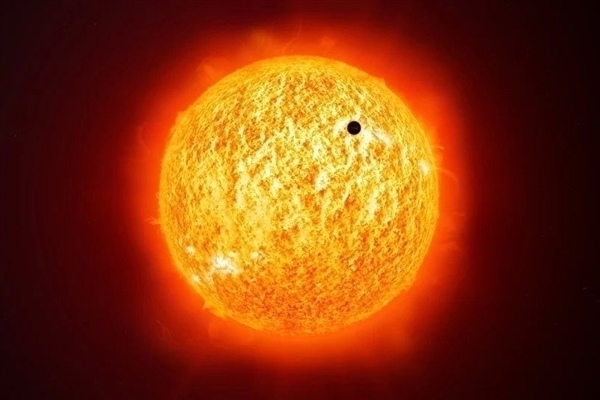
EAST operates on a nuclear fusion reaction mechanism similar to that of the sun, a process explored for harnessing nuclear fusion energy.
Nuclear fusion involves the “merging” of two light atomic nuclei into a heavier nucleus. According to the principle of mass-energy equivalence, the “lost” mass is converted into a tremendous amount of energy, significantly greater than that released in nuclear fission. This inherent efficiency makes fusion an attractive energy source.
Fusion energy offers numerous advantages, including its potentially inexhaustible supply, economic viability, predictability of output, cleanliness, and inherent safety. It is considered the ultimate energy form that humanity can master at its current level of scientific development, with the potential to propel human civilization into a new era of advancement. The successful development of fusion power would not only address global energy demands but also revolutionize industries and significantly reduce humanity’s environmental impact.