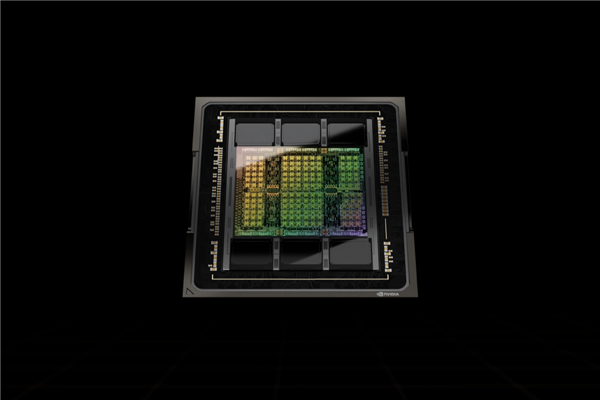
According to a report from Kuaikeji on July 17th, NVIDIA has announced that its H20 AI chips will re-enter the Chinese market following the relaxation of US export controls. However, the reasons behind this decision appear to be more complex than a simple trade agreement between the US and China.
David Sacks, the White House AI lead, revealed that a significant factor in the US lifting the ban on H20 chips is to counter Huawei’s growing presence in the Chinese market and its potential threat to American global technological leadership.
In an interview, Sacks pointed out, “You cannot simply concede the entire Chinese market to Huawei, as NVIDIA is fully capable of competing for a substantial share with a slightly less powerful chip.”
He further elaborated, “To reiterate, we will not sell our latest and most powerful chips to China. However, by doing so, we can erode Huawei’s market share within China, thereby hindering its global competition with the United States.”
Sacks also stated that in the foreseeable future, global market share will either belong to American companies like NVIDIA or Chinese enterprises. “The criterion for victory is straightforward: if, five years from now, 80% of the global market is dominated by American companies such as NVIDIA, it signifies that we have won the AI race. Conversely, if that is not the case, then we have lost.”
Previously, Sacks had acknowledged that Huawei’s rack-level CloudMatrix solutions possess the capability to compete with NVIDIA, and that the emergence of domestic Chinese alternatives is increasingly posing a threat to American AI dominance.
He concurred with NVIDIA CEO Jensen Huang’s view that if US-manufactured chips are not supplied to the global market, China will ultimately achieve a dominant position.