Recently, Jensen Huang, the CEO of NVIDIA, visited China, displaying significant interpersonal skills that garnered widespread admiration. However, behind this seemingly smooth public relations effort lies a series of more intricate stories.
A notable trend is the increasing number of automakers striving to reduce their reliance on NVIDIA. For instance, companies like XPeng and NIO have already embarked on developing their own AI chips, which have successfully been integrated into their production vehicles.
This shift is largely attributed to several notable instances where automakers felt “disadvantaged” by NVIDIA, with Li Auto being a prominent example.
According to a report from “36Kr Auto,” in late last year, many of Li Auto’s suppliers received notifications about the collective postponement of the revamped Li L-series extended-range models, originally slated for release in March of this year, to May. The necessary materials were adjusted in accordance with this revised schedule. The primary reason for this delay was the failure of NVIDIA’s Thor chip to be delivered on time.
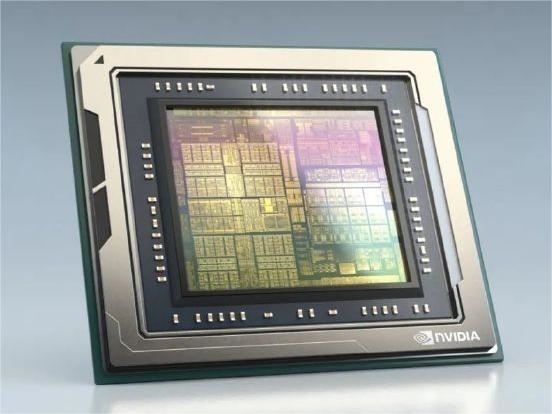
NVIDIA’s new generation autonomous driving computing chip, the NVIDIA DRIVE Thor, was first unveiled by Jensen Huang at the NVIDIA Developer Conference (GTC) on September 20, 2022. Li Auto was among the first automakers to adopt this technology.
The upgrade and refresh of the 2025 Li L-series extended-range SUVs was undoubtedly one of Li Auto’s most critical objectives for the year. A core component of this update was the planned integration of the Thor chip, boasting a computing power of 700 TOPS, into the Max models for intelligent assisted driving.
Leveraging this chip, Li Auto also intended to introduce its latest generation of assisted driving technology, the VLA (Vision-Language-Action) model, which was another key focus for the company this year.
The repeated delays in mass production of these chips by NVIDIA have translated into tangible financial losses for Li Auto. Data suggests that if the revamped Li L-series had been launched in March as originally planned, it could have potentially led to sales of at least 20,000 more vehicles, corresponding to approximately 6 billion CNY in sales revenue.
What proved even more challenging for automotive engineers was not just the delay, but the significant reduction in the chip’s advertised computing power. Engineers from various car manufacturers reported that the initial deliveries of the Thor chip were riddled with engineering and design flaws, failing to meet automotive-grade standards. Consequently, the officially advertised 700 TOPS computing power was no longer guaranteed.
After several rounds of adjustments between NVIDIA and the automakers, improvements were made for mass production and delivery. However, NVIDIA’s originally claimed 700 TOPS computing power had been reduced to less than 500 TOPS, marking a substantial decrease of 28%.
Li Auto’s plan to deploy its VLA model, with a parameter count of up to 3 billion, on this chip this year faced significantly increased difficulty due to the insufficient computing power.
Perhaps as a direct consequence of these issues, 36Kr Auto reported that Li Auto is now accelerating the timeline for the integration of its self-developed chips, bringing the deployment forward by several months and planning for mass production and vehicle integration in the first quarter of next year.