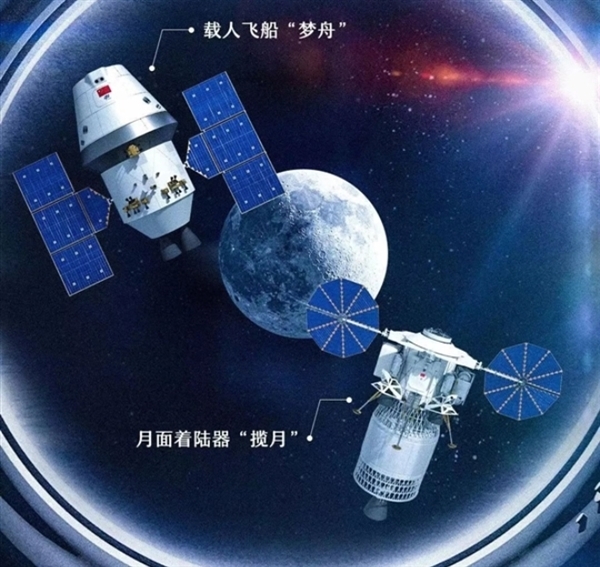
On November 1st, China’s space agency officially released the “Announcement on the Call for Design Proposals for Manned Spaceflight Missions in 2026.” This announcement details upcoming missions including the Tianzhou-10 cargo spacecraft, Shenzhou-22 crewed mission, Shenzhou-23 crewed mission, and the Mengzhou-1 spacecraft.
This announcement signifies the official confirmation that the Mengzhou-1 spacecraft is slated for launch in 2026. The Mengzhou (“Dream Ship”) series represents a significant advancement in China’s human spaceflight capabilities.

The Mengzhou crewed spacecraft is China’s new generation of crewed suborbital and orbital transport vehicles. Developed by the Fifth Academy of the China Aerospace Science and Technology Corporation (CASC), it features a modular design consisting of a return capsule and a service module. Building upon the technological foundation of the Shenzhou spacecraft, it represents a comprehensive upgrade. Through flexible configuration, it is designed to meet the demands of space missions of varying depths into space.
In June of this year, China successfully conducted a zero-altitude launch escape flight test of the Mengzhou crewed spacecraft at the Jiuquan Satellite Launch Center. This milestone is a crucial indicator of the spacecraft’s successful preliminary design completion.
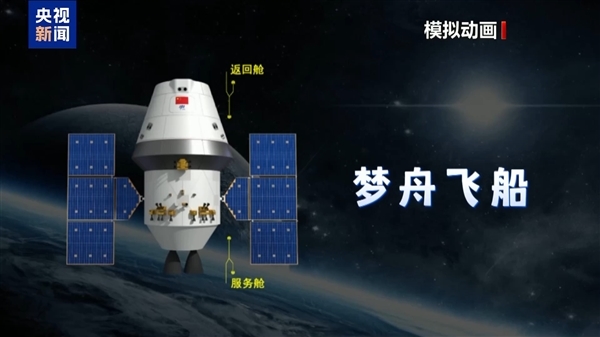
According to reports, the Mengzhou spacecraft program includes two core variants:
The Near-Earth Orbit variant is designed to support the operation of the Chinese Space Station and can carry up to seven astronauts between the Earth’s surface and low Earth orbit.
The Lunar Exploration variant will serve future crewed lunar missions, capable of transporting three astronauts across the Earth-Moon space.
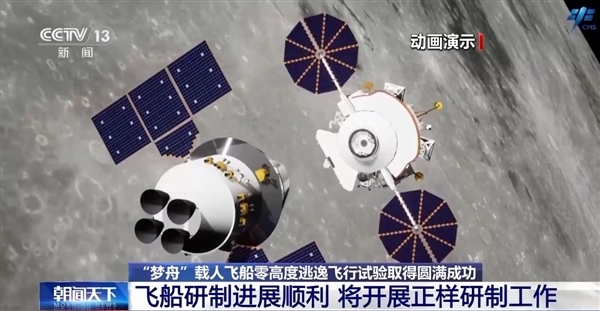
Li Zhijie of CASC explained that the Mengzhou spacecraft primarily features a two-module structure: a return capsule and a service module, along with an escape tower. These design differences result in significant improvements in comfort, crew capacity, and cargo capacity for the Mengzhou spacecraft.
Furthermore, the return capsule of the Mengzhou spacecraft is designed for multiple reuses, which will substantially reduce costs and enhance operational efficiency. This emphasis on reusability is a key trend in modern space exploration, aligning with global efforts to make space travel more sustainable and cost-effective.