As expected, Elon Musk’s trillion-dollar compensation plan has been approved.
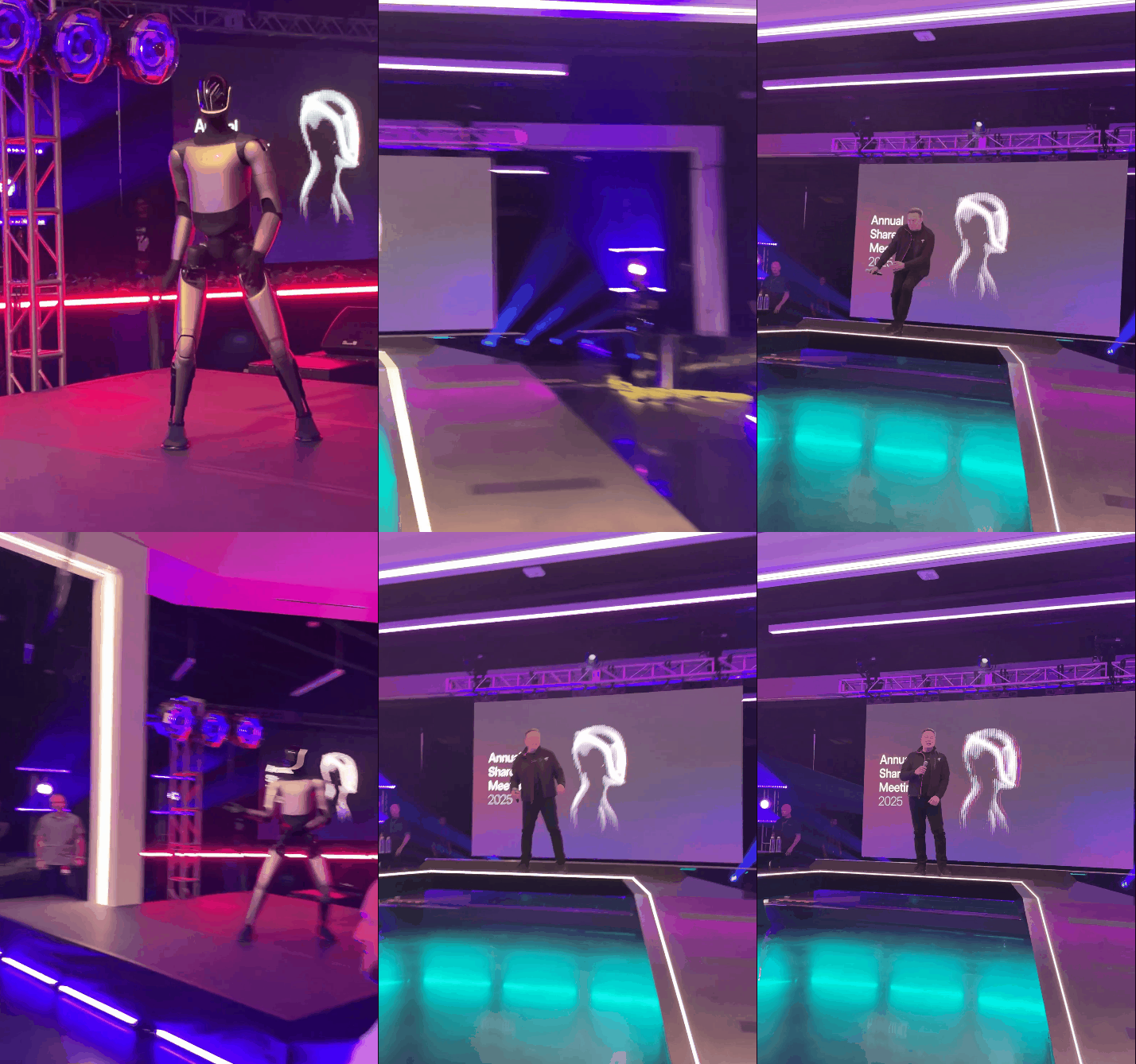
Yesterday, in the early morning hours, Tesla held its shareholder meeting, where over 75% of Tesla shareholders voted in favor of Musk’s $1 trillion compensation package.

The moment the voting results were announced, the venue erupted in enthusiastic cheers, with shareholders chanting Musk’s name.
To the shareholders, he is the soul of Tesla.

What does a trillion dollars mean?
WhileXiangpiaopiao (a Chinese bubble tea brand) can circle the Earth 3 times a year with its stirrers, Musk’s US dollars, if laid out flat, could circle it 40 times.
Of course, the shareholders are not foolish. They have set two seemingly unlikely goals for this astronomical compensation package: Tesla’s market capitalization and operating performance.
To incentivize Musk to stay the course, they have further broken down these two goals into 12 milestones. Achieving one market cap target and one operational target earns him a portion of equivalent stocks, akin to leveling up in a game.

Focusing on market capitalization, Tesla’s current valuation is approximately $1.5 trillion. The initial milestones require an increase of $500 billion in market cap. For the final two milestones, this increment requirement jumps to $1 trillion.
The operational metrics are not linear, allowing for flexibility in which target is met first.
Some of these include cumulative delivery of 20 million Tesla vehicles (currently over 8 million cumulative deliveries) and 10 million active FSD subscribers – goals that are comparatively achievable. Others, like achieving an annual EBITDA (adjusted profit) of $400 billion (four times that of Apple), are extraordinarily demanding.

If Musk achieves all these targets, Tesla’s market value could soar to an astonishing $8.5 trillion. He would also receive 423.7 million Tesla shares, which, combined with his existing 13% stake, would give him a 25% ownership in the company.
This is what it means to be richer than nations, Musk is truly becoming Iron Man.
Regardless of the outcome, these two major goals and 24 milestones represent a Herculean challenge for Tesla’s current standing.
Take vehicle deliveries as an example. Since last year, influenced by Musk’s “civil service” aspirations and political commentary, Tesla’s delivery numbers have been on a downward trend.

Although Musk later stated he would refocus on Tesla, the company has been dealing with the fallout. First-quarter deliveries saw a year-on-year decline of 13%, followed by a 13.5% drop in the second quarter.
Fortunately, the introduction of new models in the third quarter, coupled with the pressure from subsidy reductions, led to a purchasing surge in the US. Without these factors, the third quarter’s performance would have been uncertain.
However, given the situation in the first two quarters, Tesla’s overall sales for the year are unlikely to be outstanding.

This paints a clear picture of the challenges Musk faces.
The core Model 3 and Model Y have not seen significant updates for years, and there is still no news about the rumored affordable Model 2/Q.
If Tesla delays further, not only Chinese automakers but also established foreign brands like General Motors, Ford, and Hyundai could catch up.
Additionally, the Cybertruck and Semi truck have niche markets and, primarily in the US, may not achieve the scale needed to drive significant growth.

Relying solely on car sales, Tesla can no longer achieve exponential growth.
Therefore, Tesla must find new avenues for growth, which formed the core of Musk’s address at the shareholder meeting:
“Tesla needs to transition from an automaker to a technology company centered on AI and robotics.”
However, after reviewing the entire presentation, it felt more like a “pie-in-the-sky” event. Let’s break it down.
First, the recurring themes of various vehicle models and FSD.

As in the past, Tesla’s vision is that with a single software update, all vehicles on the road will achieve autonomous driving capabilities.
To realize this, Tesla needs to maximize the number of its vehicles on the road. Their solution is to reduce costs and prices through large-scale production.
Musk stated that they aim to increase production to 2.6-2.7 million units by the end of 2025, 4 million in 2026, and 5 million in 2027.
Last year, production and sales were just over 1.7 million units. Considering Tesla’s nearly balanced production and sales, this means setting a goal for a 50% sales increase next year.
Musk describes this as “ambitious,” and whether it’s achievable remains to be seen.

Equally uncertain is the highly anticipated Roadster 2. Musk jokingly responded to a shareholder’s question, suggesting a reveal on April 1st of next year, with production starting 12-18 months later.
Regardless of the Roadster 2’s success, Musk believes it will be his most exciting moment yet.
This suggests that a prototype of the Roadster 2 is already taking shape, and we can anticipate its debut around April Fool’s Day next year.

Regarding FSD, Musk mentioned the recent release of version 14.1.
Based on experiences from foreign owners, it’s speculated that v14.1 incorporates language understanding capabilities. For instance, in underground parking garages where GPS is unavailable, FSD was able to navigate to an exit using visible signage.
In addition to text recognition, Tesla’s FSD has shown unexpected proficiency in everyday scenarios.

For example, at a McDonald’s drive-thru, FSD could accurately stop at the ordering menu and proceed to the pick-up window after the interaction with the attendant is complete.
It is currently hypothesized that FSD may have gained voice recognition capabilities, which, if true, would represent a significant advancement.
Given these tangible improvements, Musk’s claim that FSD v14.3 could allow drivers to sleep while on the road gains some credibility.
For China, FSD is expected to receive full approval by February-March next year. If v14.1 becomes available in China, we will certainly conduct extensive testing then.

However, the true challenge for FSD lies in its sales model.
In China, FSD is offered as a one-time purchase for ¥64,000, and it’s still considered a semi-finished product. Outside the US, it’s a subscription service at $99 per month.
Regardless of Tesla’s accolades or its leadership in the new energy vehicle sector, these cannot overcome consumer psychology:
Why should I continue to pay for a feature when I already own the car and the hardware is capable of performing it?
This sentiment is reflected in the financial reports: for years, FSD has only accounted for about 1% of Tesla’s sales revenue, indicating that the paid autonomous driving model has not yet proven successful.

FSD may find a more significant role in Robotaxis.
Tesla showcased a segment during the shareholder meeting, revealing their CyberCab already in production on an assembly line.

Musk also announced that mass production of these vehicles will commence next year. Due to their manufacturing system being more akin to consumer electronics (lacking a steering column, pedals, etc.), their production speed is projected to be one vehicle every 10 seconds, compared to the current approximately 40 seconds per Tesla vehicle.
Google’s Waymo has already established a viable business model for Robotaxis, and it remains to be seen if Tesla can become the next player to succeed in this domain.

Next up is the humanoid robot Optimus, which received significant attention during the presentation.
In Musk’s vision, robots will not only integrate into daily life but also take over human labor, much like in science fiction movies.
The demand for robots will then be measured not in millions but in billions, ultimately aiming to eradicate poverty.
Hearing this, I feel ready to ascend to a higher plane of existence.

Returning to reality, if Optimus production reaches 1 million units per year, the cost per unit would drop to $20,000. Compared to companies like Unitree, Tesla still presents a competitive proposition.
However, unlike the IRON robot from XPeng and Unitree’s H1, Optimus has yet to clearly define its use cases. We will need to await the release of the Optimus V3 version next year for further clarity.

Finally, with the large-scale production of cars and robots, there will be a massive demand for batteries and chips.
Musk also provided insights into their plans.
Tesla has experienced battery shortages in the past, with insufficient supply from Panasonic and LG. Having learned from these experiences, Tesla has developed its own battery production lines.
Currently, chip manufacturing may present a similar challenge.
Tesla’s in-house developed AI5 chip uses TSMC’s 3nm process, with a yield rate of only 70%, which is not particularly high.
Therefore, Musk has directly stated at the meeting that Tesla may collaborate withIntel or even establish its own chip factory producing 100,000 wafers per month.
I’m unsure of TSMC’s sentiment, but the shareholders are once again thrilled.
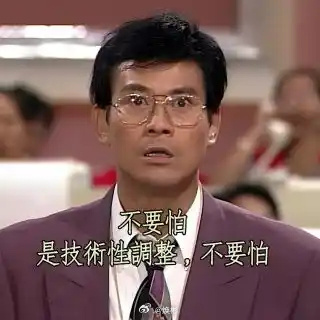
In summary, the Tesla shareholder meeting largely presented an array of ambitious, though perhaps speculative, future plans.
However, whether it’s humanoid robots or Robotaxis, Tesla’s pivot towards AI is clear. Moving forward, Tesla should no longer be viewed solely as a car manufacturer.
Whether this Tesla spacecraft will reach Mars or explode mid-flight remains to be seen, and we will likely know more once mass production begins next year.
