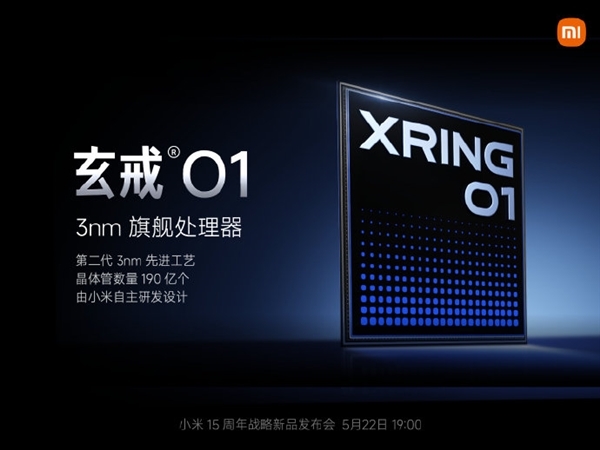
According to a revelation from the blogger “Smart Pikachu,” Xiaomi is reportedly evaluating the development of a gaming smartphone equipped with its proprietary self-developed chips. If this evaluation is successful, we may soon see Xiaomi gaming phones featuring the Xuanjie O1/O2 chipsets in the future.
This move signifies Xiaomi’s ambition to further solidify its presence in the competitive mobile gaming market. Given that leading manufacturers like OPPO and Huawei are increasingly integrating active cooling fans into their smartphones to enhance performance, it is highly probable that future Xuanjie gaming models will also incorporate such technology. This would allow the self-developed chips to operate at their full potential, delivering an uncompromised gaming experience.

Furthermore, the Xiaomi 15S Pro, which is already equipped with the Xuanjie chip, has introduced a chip performance panel feature. This allows users to manually adjust core frequencies and voltages, laying the groundwork for the advanced customization expected in a dedicated gaming phone. The inclusion of such a feature suggests a deep level of control over the hardware, a crucial aspect for optimizing performance in demanding gaming scenarios. This proactive approach to chip management by Xiaomi demonstrates a commitment to pushing the boundaries of mobile performance.
For user safety and device longevity, if any manual parameter adjustments lead to system instability, the phone will automatically revert to default settings, preventing potential issues that could arise from improper configuration.
This manual control capability is currently exclusive to the Xuanjie O1, highlighting one of the significant advantages of having self-developed chips – complete command over the underlying hardware architecture. This level of control is invaluable for tailoring the device to specific user needs and gaming preferences.
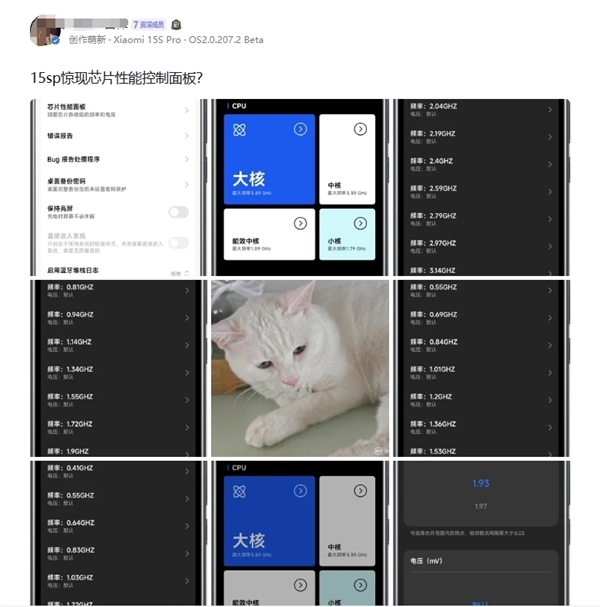

As this feature becomes more widely available, it is anticipated that dedicated gamers will meticulously fine-tune parameters for different games, creating optimized profiles that other users can readily adopt. This community-driven optimization could significantly enhance the gaming experience for a broad user base.
Should Xiaomi’s Xuanjie gaming phone materialize, the chip adjustment functionality is expected to be a standard offering. When combined with an active cooling fan, these advancements would enable the chip to reach its peak performance, facilitating a sustained high frame rate gaming experience. This holistic approach to performance optimization is key to capturing the attention of the discerning mobile gaming audience.
According to Xiaomi’s development roadmap, the Xuanjie O1 has limited production capacity, and its primary development role has largely been fulfilled. It is therefore highly likely that future new Xuanjie models will feature the O2 chipset, suggesting a continued investment and evolution in their self-developed chip technology.