
Many people choose to buy Tesla, believing that this brand is the least likely to fail. However, there’s a chilling development: in Europe, Tesla appears to be increasingly teetering on the brink of decline.
According to data from the European Automobile Manufacturers’ Association (ACEA), Tesla’s sales in July of this year experienced a significant year-on-year drop of 42.4%. In the European Union, a market of 450 million people, Tesla only managed to sell 6,600 units.

To put this into perspective, Tesla is now performing worse than BYD in Europe. Yes, that’s BYD, a brand that faces various punitive tariffs in Europe, still managed to sell 9,698 units.
Furthermore, looking at the trend, BYD is just beginning its ascent, while Tesla’s sales are in a continuous freefall. Compared to the 31,810 vehicles sold in November 2023, current sales have plummeted by approximately 80%. Even the domestic Chinese market wouldn’t see such drastic declines.

If you examine the data more broadly, you’ll notice a surprising level of unity among European consumers regarding Tesla purchases. Whether it’s Norway, which is most friendly to electric vehicles, traditional automotive strongholds like Germany and France, or even the UK which has left the EU, it appears many are moving away from Tesla. In Spain, for instance, sales have seen a startling decline of -75%.

Consequently, Tesla is facing unprecedented pressure in the European market. This situation isn’t isolated to Europe; Tesla’s performance in other regions has also been less than stellar.
According to Reuters, Tesla’s market share in the US new energy vehicle market fell to 38% in August of this year. This marks the first time since 2017 that Tesla’s share has dipped below 40%.

While 38% might still seem substantial, it’s crucial to consider the context of the US market. The new energy vehicle sector there is relatively niche, with a limited number of available models. Historically, Tesla has dominated this market, with its share once reaching as high as 80%. However, this figure has been on a steady decline since 2021, falling below 50% last year and now below 40%. This downward trend is certainly not a positive sign.

Although Tesla sold 140,000 vehicles in the second quarter of this year, its year-on-year growth has hovered around -10% for most months. Should more competitive options emerge, it’s possible Tesla could face even greater challenges.
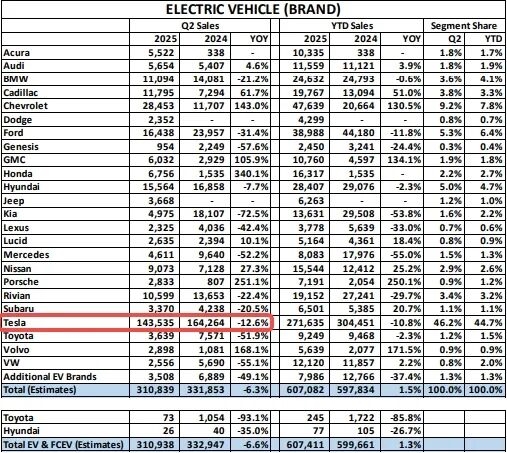

Even in China, Tesla’s situation is not entirely rosy. Over the past year, Tesla’s sales have remained around 30,000 to 40,000 units per month. While this can be attributed to the quarterly delivery cycles causing significant fluctuations, it merely represents Tesla holding its ground. Compared to the overall domestic electric vehicle market, which is growing at a healthy pace of 20% year-on-year, Tesla’s performance is only sufficient to maintain its existing customer base.

Why is Tesla facing pressure globally? Firstly, it’s undeniable that competition in the automotive sector has intensified significantly in recent years. If you were to choose a car in the 200,000 RMB price range today, the Model 3 and Model Y would certainly not be your only options.
In the European market, where Tesla’s decline has been most severe, competitors can be broadly categorized into three groups: the direct challengers from German manufacturers, the indirect competitors from French and Korean brands, and the rapidly emerging Chinese players.

German manufacturers, for example, saw their electric vehicle sales surpass Tesla in the first half of this year, making them the top performer in Europe. The Volkswagen ID.7, a direct competitor to the Model 3, sold 36,565 units, significantly outselling the Model 3’s 27,084 units. A key advantage of the ID.7 is its larger dimensions: 4961 x 1862 x 1537 mm with a wheelbase of 2965 mm, compared to the Model 3’s 4720 x 1850 x 1442 mm and 2875 mm wheelbase. Even if European consumers prefer smaller cars, the appeal of a roomier vehicle with a strong German engineering reputation is undeniable.

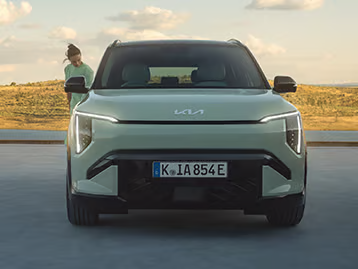
In contrast, French and Korean brands are targeting Tesla’s potential customers with smaller, more affordable electric vehicles. Models like the Kia EV3, Renault 5, and Megane E-Tech are filling a gap in the market, especially since Tesla’s more budget-friendly Model 2 or Model Q is still not available.
Finally, Chinese automakers are emerging as powerful new forces. The BYD SEAL, for instance, is a direct competitor to the Model 3 and has already made a significant impact. Given BYD’s strong presence and product offerings, its competition in the European market is considerable.

Therefore, whether in Europe, the US, or China, Tesla is facing a growing number of viable alternatives. Meanwhile, Elon Musk has seemingly shifted his focus to artificial intelligence and robotics, largely neglecting the automotive division. Beyond the updated Model Y L, there hasn’t been a significant new vehicle launch from Tesla in quite some time. While the Cybertruck and Semi are innovative, they are not yet mainstream offerings. Consequently, Tesla’s sales are still heavily reliant on the Model Y and Model 3, vehicles that were launched in 2021 and 2017, respectively. In contrast, some competitors have introduced a much wider range of new models.

This disparity in product development and market presence means Tesla is less competitive than in the past. However, Tesla’s sales decline isn’t solely due to increased competition.
In China, for instance, Tesla’s aggressive pricing strategy, including five-year interest-free financing offers, has effectively countered the challenges posed by domestic rivals. In the European market, Tesla’s inherent product strengths remain significant. Particularly in terms of energy efficiency and cost, the ID.7 consumes 14-16 kWh per 100 kilometers, while the Model 3 uses less than 14 kWh. Given the limited charging infrastructure in Europe, even Volkswagen vehicles often rely on Tesla’s charging network, and their charging costs can be higher than Tesla’s.

BYD, on the other hand, faces challenges as an imported vehicle, with punitive tariffs eroding its cost advantage in Europe. The BYD SEAL, which is arguably comparable to the Model 3 domestically, is priced at approximately 45,000 Euros in Europe, significantly higher than the Model 3’s 40,000 Euros, making sales considerably more difficult.
So, why are Europeans turning away from Tesla? The primary reason likely lies with the brand itself. In recent years, Elon Musk’s actions have become increasingly perplexing. Beyond his controversial association with political figures, Musk has transformed into a prominent KOL. He has directly engaged with protest movements, urged citizens to “stand up,” and openly commented on political events abroad. This behavior has alienated both allies and opponents.
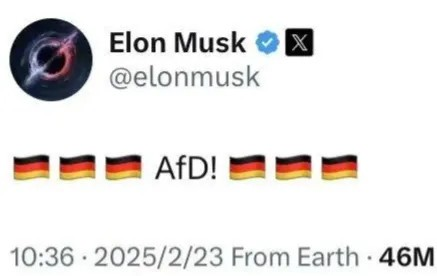
Since his infamous “middle finger” gesture, the anti-Musk sentiment in Europe has been growing. In the UK, an organization called “Everyone Hates Elon” has emerged, campaigning for account cancellations on X and boycotting Tesla products. In Germany, a survey by T-Online revealed that 94% of Germans would not consider buying a Tesla, with only 3% expressing potential interest.
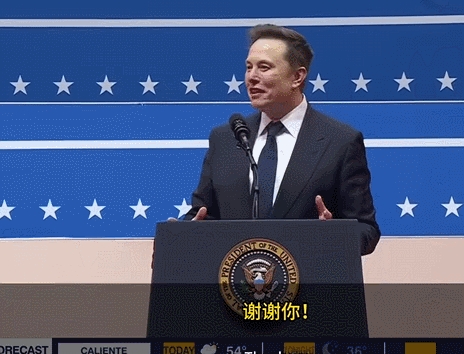
In the US, individuals critical of Musk’s statements have resorted to disruptive protests against Tesla, including arson attacks on stores, charging stations, and vehicles.

In essence, the Tesla brand, once perceived as a “tech leader,” has now become associated with “far-right ideology” in the eyes of many European consumers. This public perception has led many to opt for other brands, even if it means paying more. Elon Musk appears to be creating problems for himself.
It’s noteworthy that automotive sales aren’t always directly tied to product performance; brand perception plays a crucial role. In the past, despite widespread criticism of Tesla’s minimalist interiors, lack of physical buttons, and screen-based gear selectors, its leading position in the industry and sales growth remained undeterred. However, once a brand becomes associated with controversial or negative connotations, sales can quickly suffer.
Therefore, Elon Musk needs to take heed. If this trend continues, Tesla might indeed be nearing a critical juncture in Europe, facing a future of potential decline.
