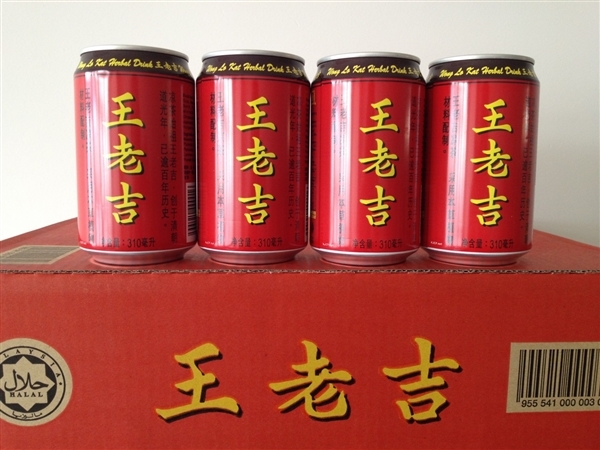
On October 12th from Kuaikeji, a new chapter in the long-standing dispute between Wanglaoji and Jiaduobao has unfolded.
On October 10th, Jiaduobao Group issued a statement asserting its ownership of the overseas “Wanglaoji” trademark, claiming exclusive rights to the brand in international markets.
In response, Wanglaoji swiftly declared, “If you’re sick, go to the hospital. If you have a problem, go to court. Thank you!” This terse reply carried a palpable sense of defiance and confrontation, signaling that legal avenues are the preferred next step.

The recent escalation stems from Wanglaoji’s assertive expansion into overseas markets. In August of this year, Wanglaoji officially designated “WALOVI” as its core international brand and launched four international can products, signaling a strategic global push.
This move appears to have prompted Jiaduobao to act. On the morning of September 30th, Jiaduobao published an article on its official WeChat account titled “Jiaduobao’s Canadian Herbal Tea Rights Protection Triumphs!” The article detailed how its affiliate, Wanjiang Company, had successfully defended the legal rights to overseas “Wanglaoji” trademarks in multiple lawsuits filed in the Canadian Federal Court and the General Court of the European Union.
Jiaduobao further claimed that through its subsidiary Wanjiang Company, it holds valid “Wanglaoji” trademarks in over 60 countries and regions worldwide. This broad claim of international trademark ownership is a crucial element of Jiaduobao’s defense and offensive strategy.

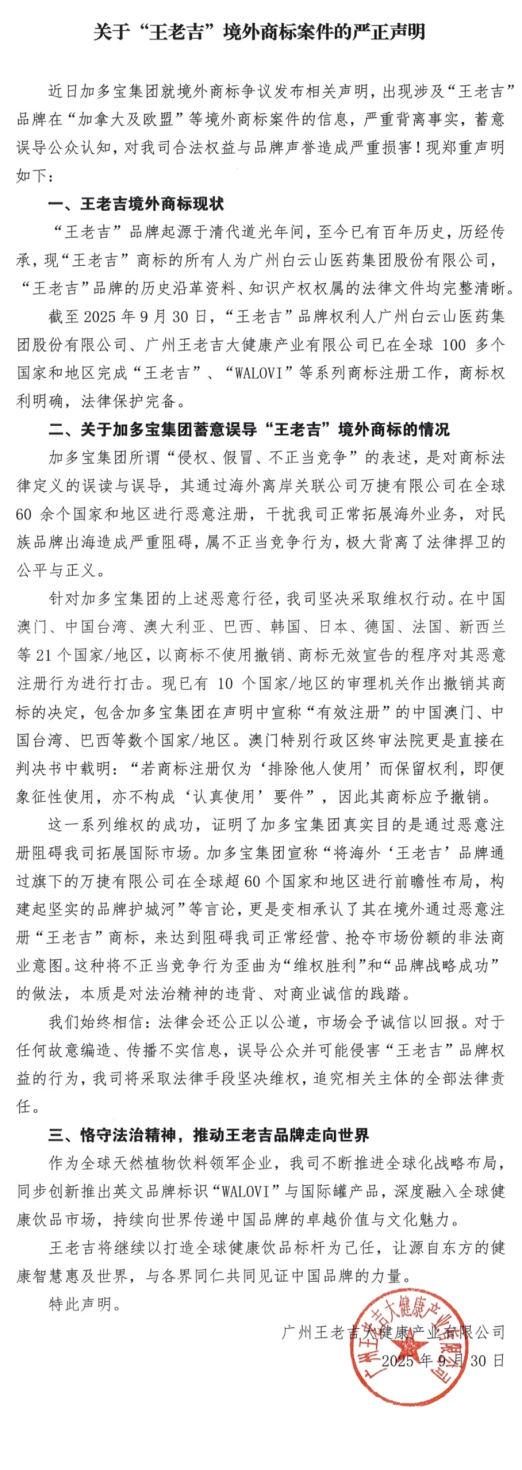
Wanglaoji, in turn, issued a “Solemn Statement” that same evening, directly refuting Jiaduobao’s claims. Wanglaoji argued that Jiaduobao’s characterizations of “infringement, counterfeiting, and unfair competition” constituted a misinterpretation and misrepresentation of trademark law. The statement emphasized that Guangzhou Baiyunshan Pharmaceutical Holdings Company Limited and Guangzhou Wanglaoji Grand Health Industry Co., Ltd., the rightful owners of the “Wanglaoji” brand, have completed trademark registrations for “Wanglaoji,” “WALOVI,” and other related series in over 100 countries and regions globally. Moreover, Wanglaoji revealed it has initiated legal action in 21 countries/regions to address Jiaduobao’s alleged “malicious trademark registration” activities overseas. This indicates a proactive legal stance from Wanglaoji, not just reactive defense.
Jiaduobao reiterated its position on October 10th, affirming its registration of the “Wanglaoji” trademark in over 60 countries and regions. The company stated its commitment to actively pursuing brand protection and assurance efforts, legally safeguarding its intellectual property rights for the overseas “Wanglaoji” brand. This sustained assertion of international rights by Jiaduobao underscores the strategic importance of the global market in their ongoing conflict.

The origins of the Wanglaoji and Jiaduobao dispute can be traced back to 1995, when Hongdao Group (the actual controller of Jiaduobao) partnered with Guangzhou Pharmaceutical Group (the parent company of Wanglaoji) to gain exclusive rights to use the “Wanglaoji” brand for its bottled beverages. Under Jiaduobao’s management, the herbal tea brand achieved significant success, expanding its reach beyond Guangdong province to become a nationally recognized beverage.
However, as the herbal tea market grew, tensions escalated towards the end of their cooperation agreement, leading to persistent disputes. In 2011, Guangzhou Pharmaceutical Group initiated arbitration proceedings with the China International Economic and Trade Arbitration Commission. The following year, the commission ruled that Jiaduobao must cease using the “Wanglaoji” trademark. In response, Jiaduobao launched its own brand, “Jiaduobao,” retaining the iconic red can packaging and some advertising slogans, which subsequently ignited a comprehensive lawsuit concerning the ownership of packaging and design rights.
Since the breakdown of their cooperation in 2011, Jiaduobao and Wanglaoji have engaged in dozens of lawsuits concerning trademarks, packaging, and advertising slogans, with billions of yuan at stake, drawing widespread public attention. A pivotal moment came in 2017 when the Supreme People’s Court ruled that the red can packaging and design rights were to be jointly shared by both parties. Despite this, Wanglaoji argued that Jiaduobao’s use of advertising slogans such as “The red can herbal tea with the nation’s highest sales renamed Jiaduobao” constituted false advertising. However, in 2019, the Supreme People’s Court’s retrial ruled that Jiaduobao’s advertising did not constitute false propaganda.
In a more recent development in July 2023, the Guangdong High Court’s retrial ordered Jiaduobao to pay 317 million yuan. Jiaduobao expressed its dissatisfaction and announced an appeal. The current expansion of their competitive arena signifies the internationalization of this protracted trademark battle, moving beyond domestic markets to the global stage.